Showing posts with label Espionage Thrillers. Show all posts

Sunday, December 14, 2025

The Satan Sampler: Victor Canning


This is the 6th book in a loose series called the Birdcage books. They were published between 1971 and 1985. They all revolve around a covert security group in the UK, a branch of the Ministry of Defense. The officials and the agents attached to the Birdcage group are generally amoral, although they believe that their mission is important to the welfare of the country.

Since this is a very difficult book to summarize, I am using the description on the dust jacket: 

On the death of his elder brother, Richard Seyton inherits the Seyton estate, which had been in the family since the fourteenth century. But the great Seyton Hall–showpiece of the estate–has been leased to an international charitable organization, the Felbeck Foundation for the Preservation of the Christian Heritage, which is not all that it seems to be. Determined to find a way to break the lease, Seyton is slowly enmeshed in a dangerous web of intrigue and underground politics, especially when the sinister intelligence organization know as Birdcage intrudes upon his affairs.


This story isn't quite as good as the earlier books. Some of the characterizations have less depth, and the spy story is very similar to the previous book. The evil practices and deceptions of the group are just as nefarious as ever, though. The story does feature several of the Birdcage characters from the previous two books, and I liked that. And the emphasis on the beauty of the countryside, the descriptions of the birds and animals, is still there. I loved the setting, the atmosphere, the use of nature. 

The Birdcage novels are usually somewhat of a downer in the end, which is realistic for spy fiction, but this one had a more upbeat ending than usual.


This quote is from the back flyleaf of the dust jacket of the first US hardback edition:

"For years now, Victor Canning has been moving into new directions with the suspense story. The spy thriller has become a novel of character with him. The doomsday book of fate intertwined with old family histories has moved into fresh insights of human foibles. The chase genre has been brought to three-dimensional life by the astute use of settings, where every bird and leaf become a part of the narrative." (Ed Hutshing, Book Editor, San Diego Union)

There are only two more books in the series, and I am looking forward to both of them.


 -----------------------------

Publisher:   William Morrow and Co., 1980 (orig. pub. 1979)
Length:       233 pages
Format:      Hardcover
Series:       Birdcage books #6
Setting:      UK
Genre:       Espionage fiction
Source:      Purchased in December, 2024.


Saturday, November 30, 2024

Alias Emma: Ava Glass


Alias Emma is the first book in a relatively new spy fiction series. Emma Makepeace has always wanted to be a spy. Her father who died before she was born was a spy, and she idolizes him. She gets her wish when she enters the military and catches the attention of the leader of a department in the Secret Service. After some training exercises, Emma is given an important assignment to bring Michael Primalova, the son of Russian dissidents, across London to a safehouse, so that he and his parents can be put in protective custody. 

Michael is a doctor, a pediatric oncologist, and initially he is reluctant to go with her and leave his patients behind. But he soon sees how much danger he is in from assassins who want to kill him. The biggest problem they face is that the Russians have hacked the CCTV cameras in London and any actions that Emma and Michael take will be known to them. 


My thoughts...

The story alternates between the action (getting Michael to the safehouse) and flashbacks to Emma's life before spying, her training, and how she became a spy. This isn't good or bad, but it does mean that — in a book of 269 pages — the actual spying part is thin. The background information is not padding, it is useful and necessary to give us more information about the characters. It will be interesting to see if the next book in the series is structured in a similar way.

Emma is a strong female protagonist, very serious about her job and learning her way as she goes. Some reviews or blurbs compare Emma to James Bond; I don't consider this a compliment. It isn't that I don't like the James Bond books by Ian Fleming; I have read most of the books, some in my youth and several since I started blogging. The original Bond series is really a mixed bag; some of the books are serious, others seem like comedies. 

This is a fine beginning to an espionage series, and two more books have already been published. I was entertained the whole time, and the pacing is very good. My only real quibble was that there was too much of a romantic vibe. The story doesn't go overboard in that direction, but even the hint of it did not add anything to the story in my opinion.


This book was recommended to me by Constance at Staircase Wit. See her review for more details, especially about the author.


-------------------------

Publisher:   Bantam Books, New York, 2023 (orig. publ. 2022)
Length:      269 pages 
Format:      Trade Paper
Series:       Alias Emma #1
Setting:      UK
Genre:       Espionage Thriller
Source:      Purchased in November 2023.

Sunday, October 6, 2024

Birdcage: Victor Canning


Birdcage is about the machinations of a British intelligence agency, referred to as "Birdcage" because its offices are in Birdcage Walk in London. There is very little oversight of this covert security group and the agents are generally amoral, although they believe that their mission is important to the welfare of the country. In reality, the higher ups are just trying to protect the government in question which they serve blindly.


This story is set in Portugal, Gloucester, and London. A young nun leaves her Portuguese monastery, feeling that she has betrayed her vows. She attempts to drown herself in the sea but by some miracle is rescued at the last minute. The man who rescues her is a regular guy, easygoing and not ambitious. 

We soon find out that the nun's real name is Sarah Branton, daughter of Lady Jean Branton, a former agent for the Birdcage group. Lady Jean is dead, but the Birdcage agents are keeping an eye on Sarah to make sure that she doesn't have damaging information about their group.

This is the fifth book in a very loose series about the Birdcage group. Especially in the first few books in the series, it is hard to see any connections between the books; there are no repeating characters for example. The tone is the same, and the department is unnamed in the early books. But as the series continues some of the agents feature in multiple books. However, my point here is that though I may be reading them as a series, they easily can be read as standalone books. 

It only recently occurred to me that this series often has a psychological / romantic suspense plot running through it. In fitting with the espionage aspects of the story, the outcome of these romantic plots are entirely unpredictable; sometimes there is a happy, optimistic ending ... sometimes not. This one is even more obviously of that type, since Sarah Branton and the man who rescues her quickly develop a bond and a growing attraction to each other.

I enjoy the glimpses of nature, and especially birds, running through all the stories. The sense of place is very prominent. I think this might be distracting to some readers, but it is one of the elements that keeps me coming back for more. The stories in this series can be very dark.


Victor Canning is one of my favorite authors. He wrote a lot of books starting in the 1930s and through the 1980s, some general fiction, some children's fiction and some spy fiction. I have stuck with his spy fiction or mystery novels so far, but I want to try some of his general fiction too. 

Today I was reading about Canning's life, and discovered that he was friends with Eric Ambler, another espionage author whose books I enjoy. This information was in a book by John Higgins, A Birdcage Companion. Per Higgins' website:

In 1940 he enlisted in the Army, and was sent for training with the Royal Artillery in Llandrindod Wells in mid-Wales, where he trained alongside his friend Eric Ambler. Both were commissioned as second lieutenants in 1941. We get a glimpse of Canning in those years from Eric Ambler's autobiography, Here Lies Eric Ambler.


 -----------------------------

Publisher:   Heinemann, 1978
Length:       233 pages
Format:      Hardcover
Series:       Birdcage books #3
Setting:      Portugal and the UK
Genre:       Espionage fiction
Source:      Purchased in December, 2023.


Friday, August 4, 2023

Six Degrees of Separation: from Romantic Comedy to The Beast Must Die


The Six Degrees of Separation meme is hosted by Kate at booksaremyfavoriteandbest. The idea behind the meme is to start with a book and use common points between two books to end up with links to six books, forming a chain. The common points may be obvious, like a word in the title or a shared theme, or more personal. Every month Kate provides the title of a book as the starting point.

The starting book this month is Curtis Sittenfeld's Romantic Comedy. I have not read that book or any of the books by that author, although I am curious about her writing.


For my first link, I will start with a romance novel ...

Rebecca by Daphne du Maurier is a romance, but definitely not a comedy. I like romance in a book, but usually not if that is the only focus. This one is also a mystery and a classic.


I like it when a book features a romance but the romance is secondary to the main plot, as in...

The Man Who Died Twice by Richard Osman, the second book in the Thursday Murder Club series. In this book the mystery plot is primary but a secondary plot is DCI Chris Hudson's developing relationship with his PC's mother, Patrice. 


Elizabeth, one of the four main characters in The Man Who Died Twice, was formerly an MI5 agent, and in this book she is helping her ex-husband Douglas, who is still working for MI5. This leads me to my next link, also featuring an MI5 agent...

The Last Defector by Tony Cape features Derek Smailes, an MI5 agent sent to London to work at the UN. The plan is for him to aid in a plot to convince a Soviet (also working at the UN) to defect and provide information on disarmament plans in Russia. 


This leads to another book I read featuring a defector...

Catch a Falling Spy (apa Twinkle, Twinkle Little Spy) is one of seven novels featuring an unnamed British spy. The agent is tasked with evaluating a Russian defector, Professor Bekuv. This novel felt like a world tour. It starts out in the Algerian Sahara Desert and returns to that spot for the denouement.  In between they visit the US, France, and Ireland.


My fifth link also features an unnamed spy, this time working for the CIA ...

The Mulberry Bush by Charles McCarry is about a man whose main focus is getting revenge for his father, a spy for the CIA whose career ended in disgrace. Now the son has succeeded in getting a job with the CIA and is bent on avenging the wrong that Headquarters did to his father. I am currently reading this book and have only about 100 pages left.


I did not realize how many books I have read that have revenge as the prime motivation.

The Beast Must Die by Nicholas Blake is a classic mystery novel, part of the Nigel Strangeways series. Nicholas Blake was the pseudonym use by Cecil Day-Lewis, who was an Anglo-Irish poet and the Poet Laureate of the United Kingdom from 1968 until his death in 1972. In this book, a father seeks revenge for the death of his son, who was killed in a hit-and-run accident. Nigel Strangeways does not show up until midway into the book.


My Six Degrees takes me from a romance set on a fictional late night comedy sketch show set in the US to a classic mystery novel set in Gloucestershire. Along the way I discussed several novels in the spy fiction genre.

If you are participating in the Six Degrees meme this month, where did your links take you? If not, have you read these books? 


The next Six Degrees will be on September 2, 2023, and the starting book will be Wifedom by Anna Funder.


Monday, February 27, 2023

Top Ten Tuesday: Favorite Spy Fiction Authors


Top Ten Tuesday is a weekly meme hosted by That Artsy Reader Girl. This week's topic is a Genre Freebie (pick any genre and build a list for that genre). 

I picked espionage fiction and I am listing my favorite authors in the genre. I limited the list to eight authors. The first two authors are my top two spy fiction authors but beyond that it is hard to decide and the order could change at any time. 

The number of books by the author's name is the number of books that I have read by them.


Charles McCarry (10 books)

I discovered the spy novels of Charles McCarry in 2009 and read them all in a few months (including the two political thrillers that are only peripherally related). Most of the novels written by Charles McCarry are about Paul Christopher, an intelligence agent for the CIA (called "the Outfit" in his books). Some of them go back and forth between events around the World War II years and the 1960's, exploring Christopher's youth and family history. Those nine books were written between 1971 and 2007. McCarry also published The Shanghai Factor in 2013 and The Mulberry Bush in 2015.


Len Deighton (16 books)

Deighton has written two spy fiction series. My favorite is the Bernard Samson series. I have read all nine books in that series, plus Winter, a historical novel which features characters from the Samson series. Deighton is probably best known for his Nameless Spy series (also known as the Harry Palmer series, because of the film adaptations). I have read four of those and I like them, but they are not my favorites of his books. And the great thing about him is I still have at least ten books of his to read.


Anthony Price (5 books)

Anthony Price only wrote 19 novels, all about David Audley, a British spy. I love this kind of spy fiction, which TV Tropes describes as the Stale Beer flavor: more realistic, not romanticizing the subject, grittier. The focus in these books is on characterization and intellect, not action, although there is some of that present. Most of the books in this series have historical events infused into a present day story. In Other Paths to Glory it is World War I and the battlefields of the Somme. In Colonel Butler's Wolf, the site of the story is Hadrian's Wall.


Mick Herron (9 books)

Mick Herron is best known for the Slough House series about MI5 spies who have been demoted due to some disgrace or screw up in their jobs, and are now working under Jackson Lamb. The first book was Slow Horses. I have read 7 books in that series, and the stories get better and better. I still have the last two books in that series to read, plus a stand alone book (set in the same universe as Slough House). And some novellas that are related to the series.


Olen Steinhauer (11 books)

Olen Steinhauer has written twelve full-length novels and I have read all but one of them. His first five novels were historical novels (the Yalta Boulevard series set in a fictional Eastern bloc country) and not strictly spy fiction but there were some espionage elements. After that he began the Milo Weaver series. Weaver is in the CIA; in the first book he is in the "Tourist" division, a group that does dirty work for the CIA. He also wrote a couple of very good standalone novels.


John le Carré (8 books)

I could not do a list like this and not include John le Carré. I don't know exactly how many novels he has written, somewhere between 25 and 30? I have only read 8 of his books, and most of the ones I read featured George Smiley, his best-known character. However, my favorite book by le Carré is A Perfect Spy, about a British spy assigned to an important post in Vienna who disappears after he gets a call that his father has died. It is around 600 pages long and I loved every page of it. John le Carré writes eloquently; he develops his characters bit by bit and pulls me into the story. 


Charles Cumming (5 books)

Charles Cumming has been publishing spy fiction novels since 2001 but his books are relatively new to me. I have only read five of the eleven books he has published. The books I have read and enjoyed are A Spy by Nature (Alec Milius #1 and his first novel), A Foreign Country (Thomas Kell #1), A Colder War (another Thomas Kell book), and Box 88, the beginning of a new series. Box 88 features Lachlan Kite, an agent for a covert spy agency. Kite is abducted, possibly by terrorists, after leaving the funeral of an old friend from boarding school. It turns out that the abduction is related to an event in the late 1980s when Lachlan was just out of boarding school, visiting his friend in France. At that time Lachlan began spying for the Box 88 group, and there are flashbacks to his introduction to the craft of spying. It was an excellent book.


Dan Fesperman (5 books)

I debated whether I should include Dan Fesperman or not. He has written thirteen books, but I am not sure how many of them are spy fiction. I have read several of his books which are combinations of spy fiction and adventure. Examples are The Small Boat of Great Sorrows (set in Bosnia, 1998) and The Arms Maker of Berlin (two time lines, one in 2009, the other in World War II). His most recent series is definitely spy fiction; both Safe Houses and The Cover Wife feature female CIA agents in Germany. And I was very favorable impressed by those books. 


These are not the only authors of espionage fiction that I enjoy, but for many of the authors I have only read one book or their focus is on other types of fiction.

I would love to hear from anyone who has opinions about these authors or suggestions for other authors I should try.


Thursday, October 14, 2021

#1976Club: Catch a Falling Spy

I love spy fiction, and especially Cold War spy fiction. Len Deighton is one of my favorite authors in that genre. When I saw that one of his spy fiction novels was published in 1976 and I had not read it, I picked it to read for the 1976 Club. Deighton's first five fiction books featured an unnamed British spy. Three of those books were later made into films starring Michael Caine. The spy was given a name in the films: Harry Palmer. This book was the seventh and last book by Deighton that featured an unnamed spy, but he is not the same spy as in the earlier books. Not that it matters.

This novel felt like a world tour. It starts out in the Algerian Sahara Desert and returns to that spot for the denouement.  In between we visit multiple spots in the US and France and Ireland. The story is narrated by the unnamed British agent. It was originally published in the UK as Twinkle, Twinkle, Little Spy.


In Algeria, the narrator and his partner in this mission, Major Mann of the US Secret Service, meet with Professor Bekuv, a Russian defector. The two agents are charged with getting Bekuv to the US and determining if he really has the information he is offering in return for asylum in the US.

In New York the agents try to get more information out of Bekuv. He demands that they bring his wife to the US to be with him, but our pair of agents are not committing to that. Then it turns out that a highly placed CIA operative has already gotten her over to the US, and the two are reunited. Bekuv is ditzy, focused more on communication with aliens in outer space and not interested in strategic scientific pursuits. His wife seems to be running the show. 

Mann and the UK agent meet up with Mann's wife and a friend of theirs, Red Bancroft. Red had shown up at a cocktail party earlier and the unnamed narrator finds her very intriguing and attractive. This foursome, plus the Bekuvs, head for the Catskills to celebrate Christmas. [If I had known this was set around Christmas time, I might have saved it for a December read.] They take the Bekuvs to Mass on Christmas Eve, and as they leave the church, Mrs. Bekuv is stabbed. By whom? For what reason? 

The agents want to know who Bekuv has been getting information on US scientific research. Mrs. Bekuv supplies the name of his contact: Henry Mann, an ex-CIA agent now living in France (and coincidentally an old friend of Major Mann). And at this point we are only at the one-third point in the book. So the rest of the book is spent chasing down leads from the intell they get and determining what to do with the Bekuvs. Is their decision to defect genuine?


My thoughts:

Happily, I liked this book best of all of Deighton's unnamed spy novels. This book (like others by Deighton) is often described as complex and confusing but it was fine with me. A more frenetic and active adventure than most cold war stories I read, but a lot of fun. The partnership between the UK agent and Major Mann adds interest and humor. They work well together.

This book highlights one of the costs of a career in the secret service. It is very hard to have a relationship of any depth or length. The British narrator falls for Red Bancroft, but she has needs and ambitions of her own. A major theme is the complexity of relationships of any type in spy fiction and the inability to really trust anyone.

I have noticed now that I am drawn to novels with defections and the problems surrounding them. I have read two other books about defections written in the 1970s. I wonder if that was a time when defections were of special interest? Robert Littell's debut novel, published in 1973, The Defection of A. J. Lewinter, is about the defection of a US scientist to the USSR. Charlie M (1977) by Brian Freemantle is about a Russian KGB official who wants to defect to the US.


The author:

Len Deighton. born in 1929, is best known for his novels, but has also written works of military history, screenplays and cookbooks. I have read all nine of the Bernard Samson series, plus Winter, a historical novel which features characters from the Samson series. I have read four of the Nameless Spy series and I like them, but I still prefer the Samson series. 


I am enjoying reading and reviewing novels from 1976 this week for the 1976 Club, hosted by Simon at Stuck in a Book and Karen at Kaggsy's Bookish Ramblings


 -----------------------------

Publisher:   Harcourt Brace Jovanovich, Inc., 1976 
Length:       268 pages
Format:      Hardcover
Setting:      Algeria, US, France, Ireland.
Genre:        Espionage thriller
Source:      I purchased my copy in 2015.


Thursday, December 3, 2020

Shooting in the Dark: Carolyn Hougan

After eight years of marriage, Claire Brooks starts an ordinary day, brushing her teeth, getting ready to go to the dentist -- when her husband walks in and announces that he is leaving her. She had no awareness that there were problems with their marriage, that he had been seeing another woman. Claire reacts strongly. Her first thought is to escape, to take leave from her job and take an extended vacation. She chooses Amsterdam, for no definable reason. 


This story was first published in 1984, and takes place in late April 1980 as the Iran hostage situation is playing out, and the reigning queen of the Netherlands has abdicated. The coronation of Queen Beatrix is about to take place in Amsterdam, and the city is filled with tourists and journalists covering that event. Shortly after Claire arrives in Amsterdam, she meets a reporter from the US, they have a fling, and both get pulled into a plot related to the situation in Iran. 

The story is similar to the plots of Eric Ambler's spy fiction; Claire is the amateur unwittingly caught in a dangerous situation that she is not prepared for. I am a fan of espionage fiction, so of course this was a perfect story for me. The characterizations were very well done and realistic. Claire is a strong female lead, who is going through personal turmoil but doesn't crack under pressure. As the reader is introduced to the various people engaged in espionage or counter-espionage, the plot gets more  circuitous and difficult to follow, but it all makes sense in the end. I enjoyed reading this fast-paced story.

I am including this book in my submissions for the European Reading Challenge for the Netherlands,


-----------------------------


Publisher:   Felony & Mayhem, 2006 (orig. pub. 1984)
Length:      430 pages
Format:      Trade paperback
Setting:      Amsterdam, Netherlands; US
Genre:       Espionage thriller
Source:      On my TBR shelf since 2013.


Friday, November 20, 2020

The Arms Maker of Berlin: Dan Fesperman

Description from the book's dust jacket:

This powerfully suspenseful new novel from Dan Fesperman takes us deep into the early 1940s in Switzerland and Germany as it traces the long reach of the wartime intrigues of the White Rose student movement, which dared to speak out against Hitler.

When Nat Turnbull, a history professor who specializes in the German resistance, gets the news that his estranged mentor, Gordon Wolfe, has been arrested for possession of stolen World War II archives, he’s hardly surprised that, even at the age of eighty-four, Gordon has gotten himself in trouble. But what’s in the archives is staggering: a spymaster’s trove missing since the end of the war, one that Gordon has always claimed is full of “secrets you can’t find anywhere else . . . live ammunition.”

This book is a mixture of adventure novel and spy thriller. History professor Nat Turnbull gets mixed up with the FBI when his former mentor is arrested for stealing important documents. Initially, I had a bit of a problem with the FBI sending a professor to investigate for them, but they needed an expert to examine the papers and interpret them, and they do keep tabs on him. And pay his travel expenses. The story begins in New York, moves to the National Archives in Washington, DC, then to Berlin, Germany and Bern, Switzerland and back to the US, in Florida.There are many surprises along the way that connect back to Gordon Wolfe's role in intelligence in Switzerland towards the end of the war.

The novel includes a second storyline set during World War II, related to the secrets in the papers that are missing, possibly stolen by Gordon. Kurt Bauer's family owned an armaments firm that is important to the war effort. Kurt is in his teens and falls in love with a young woman active in the White Rose resistance group. He is torn between his loyalty to his family and his desire to keep his girlfriend safe.

I loved this book; it did have a slow start, but there is lots of action towards the end. I like dual timelines, and the topic, World War II secrets and spies, was perfect for me. The ending was fantastic.

I am submitting this book for Switzerland in the European Reading Challenge because a major theme in this book is the espionage and international intrigue in Switzerland during World War II, especially the later years of the war.


 -----------------------------

Publisher:   Alfred A. Knopf, 2009
Length:       367 pages
Format:      Hardcover
Settings:     US, Germany, Switzerland
Genre:        Spy thrilller
Source:       On my TBR pile since 2010.


Friday, April 24, 2020

Bookshelf Traveling For Insane Times No. 6

I am participating in the Bookshelf Traveling For Insane Times meme, hosted by Judith at Reader in the Wilderness. This time I am looking at newly purchased books. I have bought a lot of books recently and these are just a few of them. Two of them I bought from Daedalus at a discount, but they still were not cheap. Two have only been recently published and they were bought from a local bookseller, Chaucer's Books, with sidewalk pickup. We have done two orders that way since the stores have been closed.


The first book is ...
A Town Like Alice by Nevil Shute, originally published in 1950.

I don't know much about this book except that it is set (at least in part) in Australia. I read On the Beach in 2019; it was on my Classics Club list. I liked that book very much so I asked for recommendations for other books. This was one that was recommended by several bloggers.

Per the back of the book, the heroine is Jean Paget, and the book starts out in Malaysia during World War II and ends up in the Australian outback.


Next is...
The Glass Hotel by Emily St. John Mandel, published this year.

I bought this book because I enjoyed Station Eleven so much, and I read good things about this book. 

The Glass Hotel focuses on two people, a female bartender named Vincent and Paul Alkaitis, who is running an international Ponzi scheme. The financier is based on Bernie Madoff, but other than that the story is entirely fictional. It is not apocalyptic fiction like Station Eleven. But I think the writing style is similar.


The next two books are spy fiction...

A Divided Spy by Charles Cumming, published in 2017

I consider Charles Cumming to be a promising new spy fiction writer (to add to my list of favorites). But the jury is still out. He has published nine novels, starting with A Spy by Nature in 2001, but I did not read any of his books before 2011, when I read The Trinity Six (which was just OK in my opinion). But that might have just been due to my lack of knowledge of the Cambridge spies. Now I know a little more about the subject.

Then, in 2018 I read A Spy by Nature (Alec Milius #1) and in 2019 I read A Foreign Country (Thomas Kell #1). I liked both of those novels and this month I read Thomas Kell #2, A Colder War, and was also impressed with it. Thus I purchased A Divided Spy, to continue reading about Thomas Kell.


Cumming is a Scottish author, and his character in this series is an MI6 agent who is on extended leave with pay due to an incident still under investigation. He is occasionally called in for special assignments.

The next spy fiction author I am featuring is from the US.

The Last Tourist by Olen Steinhauer, published this year.

Olen Steinhauer is already on my list of favorite spy fiction authors. He has published 12 novels and I have read 10 of them and I liked them all. His first five novels were historical novels (the Yalta Boulevard series set in a fictional Eastern bloc country) and not strictly spy fiction but there were some espionage elements.

The Last Tourist is the 4th book in the Milo Weaver series. Weaver is in the CIA; in the first book he is in the "Tourist" division, a group that does dirty work for the CIA. I loved that series so of course I have to read this book. Soon, I hope.


Thursday, January 23, 2020

The Last Defector: Tony Cape

I read Tony Cape's first book featuring Derek Smailes, The Cambridge Theorum,  almost exactly eight years ago, right before I started blogging. I liked it a lot and I was grateful that Felony and Mayhem had published a new edition of that book.

In the first book, Derek Smailes is a detective sergeant in Cambridge. He investigates the suicide of a student at the university who was researching the possibility of a fifth Cambridge spy. That book begins as a police procedural and morphs into spy fiction. Set in the 1980s, it was first published in 1989.

In the follow-up to that first novel, Derek has been offered a position in MI-5, and has decided to accept it because he will be sent to New York for his first assignment. He has always had an interest in the US and its culture and he is delighted to be able to experience it directly. He has a junior position as a security officer at the British Mission to the UN. The story is set when the Cold War is coming to an end and disarmament talks are going on (late 1980s).

Based on a recording recovered from a listening device, Derek's superiors plan to try to convince a Soviet citizen also working at the UN to defect and provide information on disarmament plans in Russia. They decide to use Derek as the contact point for the mission, and allow him to plan the approach. The setup of the scheme to soften up the Russian for defection is complex and intriguing. A secondary plot in The Last Defector takes place in the Soviet Union, and follows a conspiracy to take over the government due to dissatisfaction with the current leader.


Initially the planned defection goes well, but as things start to fall apart, Derek ends up suspecting just about everyone he is working with of treachery, even the woman he wants to marry. He is a more realistic protagonist than some I have encountered in spy fiction. He is eager to take on a challenging assignment that could give his career a quick shot in the arm, but has doubts about his abilities and whether he and his group are doing the right thing.

I found this second book in the Derek Smailes series to be a worthy successor to the first. The plot was complex but not confusing. There were a lot of characters to keep track of, but that wasn't a problem either. The people he works with are well developed characters, with different personalities, but the officials back in Russia are more stereotypical. However, that seems to be true in many spy books I have read.

As with the first book, it was the development of the main character, Derek, and his new relationships in his job and with his ex-wife and daughter back in England, that made this book especially enjoyable to read. I like it when espionage stories explore the characters personal lives and motives, and I was happy that I made the effort to find a copy of the second book in this series.

This biographical information is available at Felony and Mayhem:
Tony Cape was born in Wales and grew up in Yorkshire before attending Cambridge University. After working as a journalist in Northern Ireland and England he moved to the United States in 1977 to join the Buddhist community of Tibetan meditation master Chogyam Trungpa, Rinpoche. In the 1990s, he published a series of spy novels featuring Derek Smailes, a former police detective turned counterintelligence officer. The first of these, The Cambridge Theorem, became a bestseller in Britain and Italy, and was re-released by Felony and Mayhem Press in 2006.
See my review of The Cambridge Theorem.


-----------------------------

Publisher:  Doubleday, 1991.
Length:      390 pages
Format:      Hardcover
Series:       Derek Smailes, #2
Setting:      New York City, US; UK
Genre:       Spy fiction
Source:      I purchased my copy in 2013.


Thursday, January 16, 2020

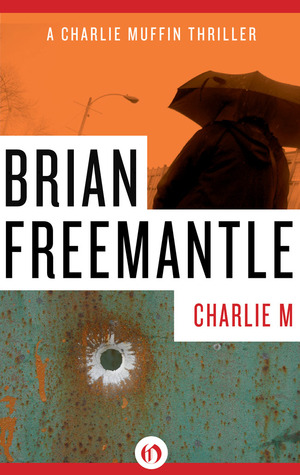
Charlie M: Brian Freemantle

I have wanted to read the Charlie Muffin series for years. The books in this series about a British intelligence agent were published between 1977 and 2013. Charlie M is the first in the series, and I only had an ebook copy, so I finally broke down and read the book in that format in October 2019. It was all I had hoped for.

Description of Charlie M at Open Road Media:
Charlie Muffin is an anachronism. He came into the intelligence service in the early 1950s, when the government, desperate for foot soldiers in the impending Cold War, dipped into the middle class for the first time. Despite a lack of upper-class bearing, Charlie survived twenty-five years on the espionage battle’s front line: Berlin. 
But times have changed: The boys from Oxford and Cambridge are running the shop again, and they want to get rid of the middle-class spy who’s a thorn in their side. They have decided that it’s time for Charlie to be sacrificed. But Charlie Muffin didn’t survive two decades in Berlin by being a pushover. He intends to go on protecting the realm, and won’t let anyone from his own organization get in his way. 
Charlie Muffin does not fit in with the rest of the men he works with. They look down on  him and consider him "a disposable embarrassment, with his scuffed suede Hush Puppies, the Marks and Spencer shirts he didn’t change daily and the flat, Mancunian accent." And they underestimate his abilities.

Charlie's boss, Sir Henry Cuthbertson, has learned that an important Russian KGB official, General Valery Kalenin, wants to defect. He and his team start plotting to set up the defection, excluding Charlie. The CIA finds out about the scheme and insist on being part of the plan. Things start to go badly with Cuthbertson's scheme, and they are forced to use Charlie in the end.

As you can probably tell from the description, the Charlie Muffin books are closer to the Nameless Spy series by Len Deighton than the James Bond type of espionage. This is the kind of Cold War spy fiction I enjoy, and I hope the rest of the series is as entertaining.

There is a very unexpected ending (at least for me) and I don't know exactly how the series can continue, but there are 15 more books in the series, so somehow it does.

The ebook I read features an interesting biography of Brian Freemantle with photographs from the author’s personal collection.

See also Col's review at Col's Criminal Library.


 -----------------------------

Publisher:   Open Road Media, 2011 (orig. publ. 1977)
Length:       207 pages
Format:      ebook
Series:       Charlie Muffin, #1
Setting:      UK, Germany, Russia
Genre:        Espionage fiction
Source:      On my Kindle since 2013.


Wednesday, March 6, 2019

The Tears of Autumn: Charles McCarry

Following my post on The Shanghai Factor by Charles McCarry two days ago, here are my thoughts on another book by that author, probably his most well-known book, The Tears of Autumn. I read that book for the first time in June of 2009.

After I heard of Charles McCarry's recent passing, I began re-reading The Tears of Autumn, the second book in the Paul Christopher series. Christopher is a CIA agent, and this book takes place in a few weeks before and after John F. Kennedy's death in 1963.


In this story, McCarry proposes a solution for the Kennedy assassination.

From the dust jacket of my hardback edition:
Christopher, at the height of his powers, believes he knows who arranged the assassination, and why. His theory is so destructive of the legend of the dead president, though, and so dangerous to the survival of foreign policy that he is ordered to desist from investigating. But he is a man who lives by, and for, the truth--and his internal compunctions force him to the heart of the matter. Christopher resigns from the Agency and embarks on a tour of investigation that takes him from Paris to Rome, Zurich, the Congo, and Saigon.
I will introduce this book to you with a quote from Patrick Anderson's review at The Washington Post, following the release of the Overlook Press reprint edition in 2005. (The book was originally published in 1974.)
I approached this handsome new edition of Charles McCarry's masterpiece, "The Tears of Autumn," with trepidation. The novel was first published in 1974, and it has been more than 20 years since I last read it. I had only a hazy memory that (1) it was beautifully written, (2) it offered a plausible theory of the Kennedy assassination and (3) it was a classic. My concern was that, given a new reading, the novel might not hold up, but my fear was groundless. "The Tears of Autumn" is beautifully written, its conspiracy theory still intrigues and it most assuredly is a classic.

I wholeheartedly agree with Patrick Anderson. This is a fantastic book by an underappreciated novelist. It is hard for me to explain what I like so much about his books. I don't even know that this is my favorite in the Paul Christopher series. I read all of the books in the series in 2009 and I loved the series overall.

The first book, The Miernik Dossier, is very different from the rest of the books, telling the story through transcripts of conversations, memos, diary entries and such. The series skips around in time, and each book is a bit different, so it probably doesn't even matter what order they are read in, but I read them in order of publication. I give a brief overview of the series and the author in this post on the blog.

One complaint about Paul Christopher's character is that he is too perfect, noted by the reviewer above and others. I never noticed that. He is intelligent and determined, he believes in finding the truth and exposing it, but he also risks other people's lives to get at the truth, so I did not see him as a paragon.

If you like spy fiction and you haven't tried Charles McCarry's books, they are worth a try.


 -----------------------------

Publisher:   Overlook Press, 2005 (orig. publ. 1974)
Length:       276 pages
Format:      Hardcover
Series:       Paul Christopher, #2
Setting:      US, Vietnam, Rome, Switzerland, and more
Genre:       Spy fiction
Source:      I purchased this book.

Monday, March 4, 2019

The Shanghai Factor: Charles McCarry

I was saddened to hear that Charles McCarry has died, on February 26th, at the age of 88. He wrote seven novels about CIA agent Paul Christopher, and several standalone novels. He is one of my top three authors of espionage fiction (the other two are John le Carre and Len Deighton).

I had just finished reading The Shanghai Factor, McCarry's next to last novel, on February 22nd. So it seems appropriate to review that novel at this time.


The story is told by an unnamed spy, working for an unnamed US agency, who is living in Shanghai to learn Mandarin. (And the weird thing is I did not even realize that he was not named until I read it in a summary after finishing the book.)

So for two years (or more?) this American spy lives in China as a sleeper agent, learning Mandarin from a Chinese woman, Mei, that he meets accidentally. Because the meeting is accidental he often wonders if Mei is also an agent, assigned to keep an eye on him. During this time, he is recruited to work for a rich and powerful Chinese CEO, whom he suspects is part of a Chinese intelligence group. Eventually, his life is threatened and he is ordered back to the US, where his handler has new plans for him, using his knowledge acquired while in China.

Most spy novels I read have an underlying theme of betrayal and mistrust, and this one is no different. So I have often wondered why anyone would become a spy or remain in that field. Of course these are fictional spies, but many of the best authors of spy fiction had previous experience in espionage, including Charles McCarry. The protagonist of this novel explains his reasoning: “the truth was that I had become a secret agent because I could not bear for another minute the pointlessness of life in the real world.”

The Shanghai Factor was a wonderful read, suspenseful, and has a wow ending, but what I really loved is the protagonist's asides about his life before spying, his relationship with his mother, and his philosophy of life. I was immersed in this novel while reading it, and I will certainly read it again, but nothing else McCarry has written will top the Paul Christopher novels for me.

A possible negative for some readers: This book focuses a lot on sex, and especially the sex life of the protagonist.

This is what Mike Ripley had to say at Shots Crime and Thriller Ezine:
This is a fascinating read, with insights into the world of young, rich Chinese ‘princelings’ who are at heart ‘secret Americans’ rather than die-hard communist party members and a restrained, non-judgemental character study of an intelligent, patriotic, but painfully lonely young man caught up in the spider’s web of spying.
See also:


 -----------------------------

Publisher:  Mysterious Press, 2013.
Length:      292 pages
Format:     Hardcover
Setting:     Shanghai, China; US
Genre:      Spy fiction
Source:     I purchased my copy. 


Wednesday, September 19, 2018

The Limbo Line: Victor Canning

Richard Manston has quit his job in intelligence work but his old  boss has called him back for another assignment. They have identified a Soviet group that kidnaps Russian defectors and returns them to the USSR to deter others from defecting. A young ballerina who is now living in England will be the next target. Manston wants to prevent the kidnapping but his superiors want to allow it to happen so that they can trace the route and shut down the operation.


I would describe this story as an Alistair MacLean adventure crossed with the James Bond books by Ian Fleming. I have read seven books by Fleming but only one by MacLean (The Guns of Navarone) so this may not be entirely accurate. Manston is working for an unnamed secret intelligence group but the story felt much more like an adventure thriller to me, with romance included. All of it was very well done, including the romance, so no complaints here.

Manston is a very likable character. He shows up later in the Rex Carver books, and in those books he is a bit different, darker. I also like the portrayal of Irina, the dancer, a woman who is capable and unafraid. That may be one of Canning's strongest points for me; he does a very good job with his characters, keeping me interested and involved whether they are good or bad or in between. There are some very interesting villains in this book too.

I am a big fan of Victor Canning's writing. I have only read his mystery and espionage fiction, and this is only the fourth book of his I have read, but I will be seeking out more of his books.

One resource I used in writing this review was a reference book by John Higgins, A Rex Carver Companion.

This review of Limbo Line at Mystery*File has more details, and more about the author's writing career and recommended books.


-----------------------------

Publisher:   Berkley Medallion Books, 1965. Orig. pub. 1963.
Length:      192 pages
Format:      Paperback
Setting:      UK, France
Genre:       Adventure, Thriller
Source:      I purchased this book.

Saturday, August 4, 2018

Six Degrees of Separation from Atonement to The Coffin Dancer

The Six Degrees of Separation meme is hosted by Kate at booksaremyfavoriteandbest. The idea behind the meme is to start with a book and use common points between two books to end up with links to six other books, forming a chain. Every month she provides the title of a book as the starting point.

The starting point this month is Atonement by Ian McEwan.  It sounds like it would be my kind of book, based on the time periods it covers, but it never appealed. I do have a copy and it is on my "maybe someday" list to read.

The link to my first book is by author name... first name. In the last few years, I have read a lot of the James Bond books by Ian Fleming, and my favorite so far is From Russia With Love. James Bond is a serious spy, and Fleming modeled him after people he knew in the Secret Service, but the novels are sometimes more adventure stories than spy fiction and sometimes verge into fantasy. In every book James Bond romances one or more women.


From James Bond I move on to Funeral in Berlin, a novel about the nameless spy created by Len Deighton. The nameless spy, known as Harry Palmer in the movies based on the books, is more of a common, everyday person than the James Bond type of spy; sure, he visits exotic locales, and he deals with dangerous situations and dangerous people, but he is just a working-class guy, doing a job, and has a girlfriend from the office.


I discovered Len Deighton's books in 2012, and since then have read many of his books. Another favorite is Winter: A Berlin Family 1899-1945. This story of one family in Germany shows the rise of the Nazi party, how it affected Germans and how they dealt with the changes in their society. The focus is on two brothers, both born around the beginning of the twentieth century. Their mother is from a wealthy American family, the father is a well-to-do German industrialist. Both grow up in Germany, and they fight on the German side in World War I.  Between World War I and World War II they take different paths.
Another book related to Germany  between the two world wars is In the Garden of Beasts: Love, Terror, and an American Family in Hitler's Berlin. This is Erik Larson's non-fiction account of the years from 1933 to 1937 when William Dodd was the American Ambassador to Germany. He and his family lived in Berlin and took part in society functions there. An extremely interesting book.

The "garden of beasts" referred to in the title is Berlin's central park, the Tiergarten; the Dodd family lived in a home on the edge of the park. Another book with a similar title is also set in Berlin, Garden of Beasts by Jeffery Deaver. This book is a standalone historical thriller, set at the time prior to World War II that Germany was building toward rearmament. The protagonist is a German-American mobster hit man who is forced to take on the assignment of killing Reinhard Ernst, the man behind the  rearmament effort.


Moving away from Berlin and earlier times, my final stop is another book by Jeffery Deaver, The Coffin Dancer, the second book in the Lincoln Rhyme series. Rhyme is a quadriplegic who is skilled at forensic investigations, usually working as a consultant to the police department. Here he is looking for an assassin who is targeting witnesses to a killing. I read this book nearly two years ago and never reviewed it. It was very suspenseful, kept me entertained throughout, but had too many twists and turns at the end... and too long. On the other hand, a lot of the subject matter relates to flying airplanes and aviation, and if Deaver isn't an expert on the topic he did tons of research because it is very realistic in that area.


My chain covered mostly earlier periods in history but ended up with a thriller. It was a lot of fun. Check out the other chains, the links are always interesting.