This is my idea of a good mix of reading for the month. A majority of the books were mysteries. One nonfiction book and two general fiction books. The only improvement would have been if I had read at least one vintage mystery.
Nonfiction
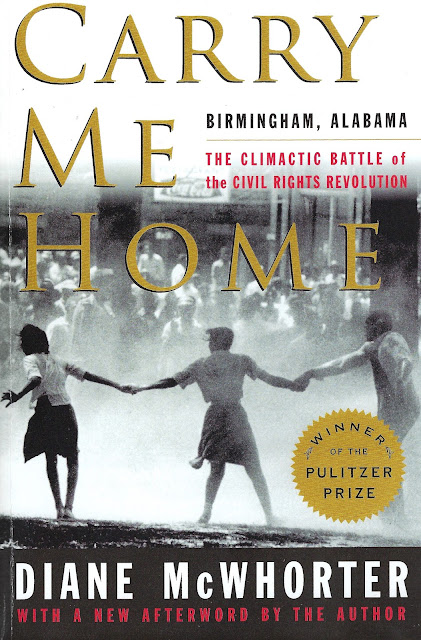
Carry Me Home: Birmingham, Alabama: The Climactic Battle of the Civil Rights Revolution (2001) by Diane McWhorter
This book won the 2002 Pulitzer Prize in General Nonfiction. From the Pulitzer site:
"A major work of history, investigative journalism that breaks new ground, and personal memoir, Carry Me Home is a dramatic account of the civil rights era's climactic battle in Birmingham, as the movement led by Martin Luther King, Jr., brought down the institutions of segregation."
I started reading this book one year ago, took about a long break in the middle, and took about a month to finish the last 300 pages (of 600).
General Fiction
Convenience Store Woman (2016) by Sayaka Murata
Translated from the Japanese by Ginny Tapley Takemori
This is an interesting story about a woman who does not fit in. Keiko is a 36-year-old woman who has been a part-time convenience store worker in Tokyo for 18 years. The novel is short, about 160 pages, and very strange, but I loved it. Reviewed here.
Strange Weather in Tokyo (2001) by Hiromi Kawakami
Translated from the Japanese by Allison Markin Powell
Another book set in Tokyo. The style of this book was unusual. It seemed to be made up of vignettes of the friendship between a woman and a male teacher who had been her teacher in school. Then it pulls together and has more focus, and I liked the ending a lot. Reviewed here.
Crime Fiction
Nemesis (2002) by Jo Nesbø
Translated from the Norwegian by Don Bartlett
Nemesis is the fourth novel in the Harry Hole series, which is mostly set in Norway. I did not enjoy reading this novel, but I recognize the high level of Nesbø's writing. Reviewed here.
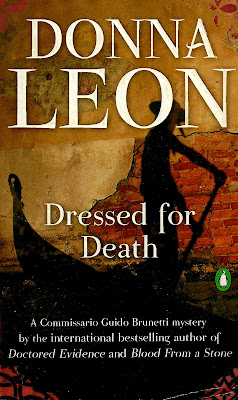
Dressed for Death (1994) by Donna Leon
This is the third book in the Commissario Brunetti series, set in Italy; it has been over ten years since I read the first two books in the series. Brunetti has to go to Mestre to handle a case because the Commissarios there are all unavailable. The dead body of a man, badly beaten, is found near a slaughterhouse; the face is so mutilated that identification of the body is difficult. I liked this book and I am glad I got back to reading this series.
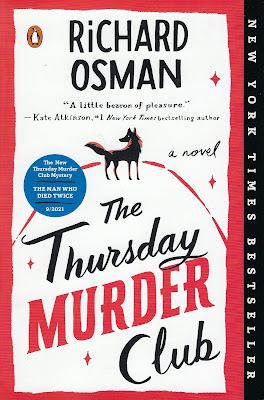
A quartet of men and women in their seventies or eighties form a club called the Thursday Murder Club. They start out investigating cold cases, whose case files they inherited from a former member who had access to police files. Then they have the opportunity to investigate a real crime, when a part owner of their retirement complex is killed. I found a lot to like about this book and plan to read the second book in the series as soon as possible.
One Corpse Too Many (1979) by Ellis Peters
The best thing about the books in the Chronicles of Brother Cadfael series is the setting. I learn so much about the times reading these books. Per Goodreads, the books in the series are "set between about 1135 and about 1145, during 'The Anarchy', the destructive contest for the crown of England between King Stephen and Empress Maud." This is the third book in the series and I have many more left to read.
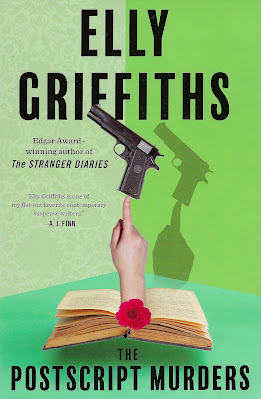
The Postscript Murders (2020) by Elly Griffiths
This novel features Harbinder Kaur, who was also a character in an earlier book by Griffiths (The Stranger Diaries). Harbinder is a closeted gay Sikh Detective Sergeant in the police in Shoreham, West Sussex. She is the principle investigator into the death of an elderly woman, Peggy Smith, in a apartment complex for senior citizens, although initially she is not convinced it was murder. Peggy's carer, Natalka, is the one who is convinced that Peggy's death was murder, and she and two of her friends who knew Peggy also investigate. I liked this book very much, although it is quite different from The Stranger Diaries.
Status of my challenges:
- I have read three novels for the European Reading Challenge, but only reviewed one of them so far.
- I have read and reviewed three novels for the Japanese Literary Challenge. That challenge will end on March 31, 2022.
- I have read at least two books that fit categories for the Bingo Challenge. I will go into more detail on that when I have more read for that challenge.
- Back to the Classics Challenge: Nothing so far.
- The TBR Pile Challenge at Roof Beam Reader: Nothing so far.
- I recently joined the Mount TBR Challenge, run by Bev Hankins, via Goodreads. So far this year I have read 13 books from my TBR for that challenge.
- Reading Ireland is going on for the month of March at 746 Books, and I have read one book for that event. I hope to read another this month.