Showing posts with label John Godey. Show all posts

Saturday, January 1, 2022

Six Degrees of Separation: From Rules of Civility to The Quickening


The Six Degrees of Separation meme is hosted by Kate at booksaremyfavoriteandbest. The idea behind the meme is to start with a book and use common points between two books to end up with links to six books, forming a chain. The common points may be obvious, like a word in the title or a shared theme, or more personal. Every month Kate provides the title of a book as the starting point.


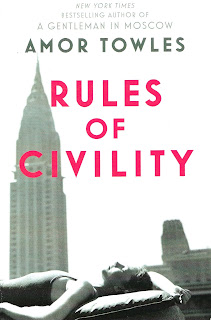
The starting point this month is Rules of Civility by Amor Towles. The main story in that book begins on New Year's Eve in 1937, and ends shortly before Christmas in 1938, so it is very appropriate for this time of year. I own that book and when I saw that Kate had picked it for the beginning of the chain for January 2022, I decided to read it in December. My review is here.


In the Preface to Rules of Civility, the book's heroine, Katey, is attending an exhibition of photographs by Walker Evans at the Museum of Modern Art in New York City. The exhibition is Many Are Called, the first exhibit of the portraits taken by Walker Evans in the late 1930s on the New York subway with a hidden camera. She sees two photos of a man she knew in 1938, which leads her to remembering that year in her life. Thus my first link is to Walker Evans at Work, part of my husband's collection of photography books. 
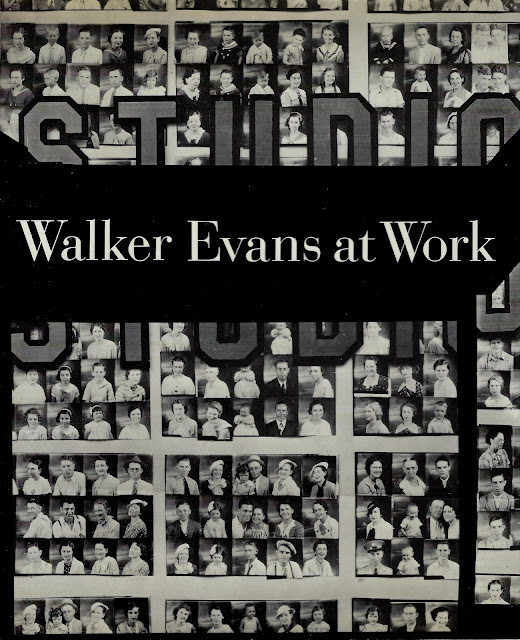

The subtitle for this book is "745 Photographs Together with Documents Selected from Letters, Memoranda, Interviews and Notes." There are photographs from Walker Evans' projects throughout his life, with notes on how they were chosen, and how he worked. Often there are several versions of photos, not just the ones chosen for publication or viewing. The book includes several pages of subway photographs, and various drafts of explanations how the photos were achieved with a hidden camera. Check this link for photos from the Many are Called collection.


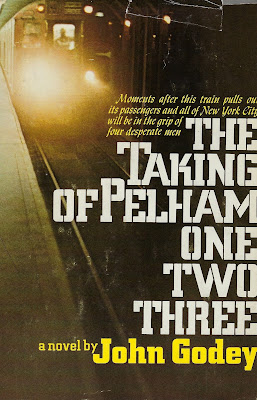
From photos taken on the subway, I move to The Taking of Pelham One Two Three by John Godey, which is primarily set on one subway train in New York City. 

Subway train Pelham One Two Three is hijacked by four men: an ex-mercenary soldier; a former motorman (driver) for the subway; an ex-Mafia crook; and one man hired mainly for his muscle. They demand a $1 million ransom, or else hostages will be killed. The book was published in 1973 and it was adapted to film in 1974. I enjoyed both book and film. My review here.

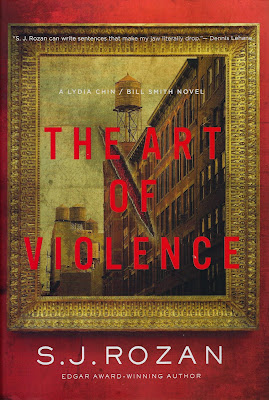
For my next book, I chose another one set in New York City. The Art of Violence is the thirteenth book in S.J. Rozan's series about private investigators Lydia Chin and Bill Smith. Bill lives in Manhattan; Lydia is an American-born Chinese who lives in New York’s Chinatown. This one is set in the art world of New York. Bill's client Sam Tabor, just out of prison after a five-year homicide stint, is a very talented painter who is convinced that he has killed two women. My review here.

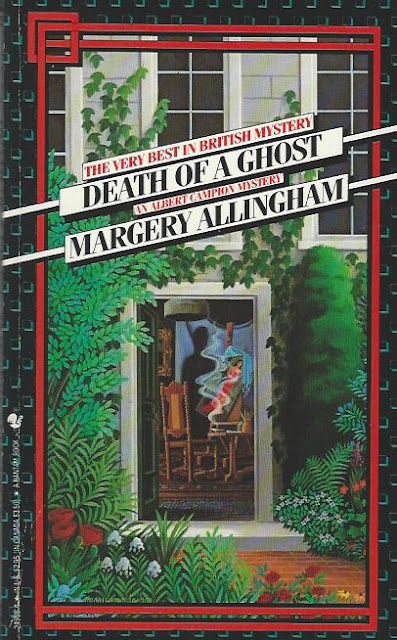
Death of a Ghost, published in 1934 by Margery Allingham, also focuses on the world of art. This one is set in London. Belle Lafcadio's husband was a famous painter, and he instructed his agent to exhibit twelve of his pictures, one every year, after his death. A murder is committed at the event when the eighth painting is unveiled. Albert Campion, Margery Allingham's detective and a friend of Belle, investigates. This was the 6th book in the Campion series. My review here.


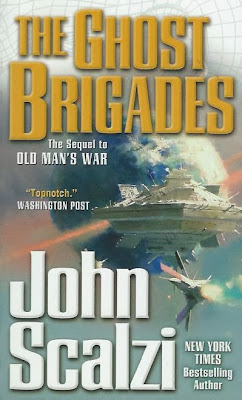
From "ghost" in the title of the previous book, I move to The Ghost Brigades by John Scalzi. With this book, I move away from crime fiction to military science fiction. When I read this book I had never read any military science fiction, but really it isn't much different from other books in the science fiction genre. The "ghosts" used in the Special Forces in this book are clones of dead soldiers turned into perfect soldiers for dealing with challenging situations. I especially liked the characters in this book: the portrayals of the humans working at all levels, the portrayals of the alien species.  Also moral issues surrounding the use of clones bred to defend earth and its colonies are explored. My review here.

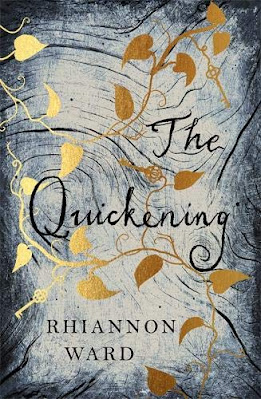
Continuing with the "ghost" theme, my last book is The Quickening by Rhiannon Ward (who also writes as Sarah Ward). This is a suspense novel with gothic elements, spooky and sort of creepy. It is set in 1925 and highlights how many families lost sons and fathers to World War I. The main character is a female photographer who is documenting the contents of an estate that is in disrepair and being sold. There is an excellent subplot about a séance that took place back in 1896, and its continuing effects on the family. I felt like the ending left it open whether there was an actual ghost at work in this story or not, but the possibility of a ghost on the estate is important to the plot.


So my chain moves from Rules of Civility, a historical novel set in New York, to a book about the photographs of an important photographer, on to two crime novels set in New York City, then to the art world in London in the 1930s, next to a science fiction novel, and ends in the British countryside at a possibly haunted estate.


Next month's Six Degrees on February 5, 2022 will start with No One Is Talking About This by Patricia Lockwood.


Thursday, September 9, 2021

Reading Summary for August 2021


I read nine books this month, a bit more than usual. I read two historical fiction novels, two science fiction novels, and five crime fiction novels. Some were contemporary novels and some were older novels from 1950 and before. And a decent number of short stories, although I should be reading more.

I finished all of the books on my 20 Books of Summer list, and am glad to be back to unplanned reading. 


Historical Fiction


The Women in Black
(1993) by Madeleine St. John

In some ways this is a wonderful book. It is about several women who work in the women's dresses department in a big department store, in 1950's Australia during the Christmas rush and post-Christmas sales. The setting is great. I enjoyed reading the book, I cared about the characters, but it was too light and "feel good" for me.  I keep having mixed feelings about this; I might come back to it and review it in December. There is a film adaptation directed by Bruce Beresford.


Historical Fiction / Romance

The Grand Sophy (1950) by Georgette Heyer

Miss Sophy Stanton-Lacy is an outrageous woman. She is young but was raised by her father to be independent and think for herself. She is always trying to fix people and usually succeeds. This is only the second Regency romance by Georgette Heyer I have read (and I haven't read any by other authors). I enjoyed this as much as I did Frederica. The plots are quite different, but I did notice similarities in the heroines in the two books, and the types of families involved. Both feature a number of younger children, which was interesting.


Science Fiction

Way Station (1963) by Clifford D. Simak

All I knew when I started this book was that it was a science fiction classic about a man on earth, in the US in the 1960s, providing a station where aliens from other planets stop overnight while traveling from planet to planet. This is completely hidden from the rest of the world. It is a very interesting and entertaining book, with lots of tension, because his station is discovered, and I was surprised at the ending. It is very much of its time, but I did not mind that at all.


Just One Damned Thing After Another (2013) by Jodi Taylor

This is the first book in a time-travel series. The main protagonists are historians from St. Mary’s Institute of Historical Research. Each has a special area of expertise but the assignments may take them to any time in the past. The story carries you along pell mell through adventure after adventure, and the historians find out that there are lots of challenges ahead.  There are now 12 books in the series and I will be reading the next one for sure. 


Crime Fiction

Lockdown (2020) by Peter May

This is a police procedural mystery set in London during a pandemic that has paralyzed the city. I enjoyed it, but it is not my favorite book by Peter May. See my thoughts here.


The Art of Violence (2020) by S. J. Rozan

This is the thirteenth book in S.J. Rozan's series about private investigators Lydia Chin and Bill Smith, and I have read every book in the series. I loved this book, especially the ending. See my thoughts here.


The Turquoise Shop (1941) by Frances Crane

Beginning in the early 1940's, Frances Crane wrote a series of over 25 books featuring Pat and Jean Abbott. This is the first book in the series, set in a fictionalized version of Taos, New Mexico, where Jean Holly owns a shop that sells antiques, art, and jewelry. Pat Abbott is a private investigator, who at the beginning of the story maintains that he is just there on vacation. Most of the books had a color in the title, and they were set in a variety of locations. In all the books, Pat does most of the investigating, and the stories are narrated by Jean. The other book I read in this series, The Indigo Necklace, was set in the French Quarter in New Orleans during the closing months of World War II. For me, these are enjoyed for the locations and the ambiance of the 1940's and 50's, and the mystery is just a sideline.


The Mouse in the Mountain (1943) by Norbert Davis

This is a book I have been meaning to read for nearly 10 years. It is vintage crime fiction from the US, published in 1943. The story is humorous. One of the characters is a large dog named Carstairs, a Great Dane. His owner is Doan, a private investigator. It is a very short novel, set in Mexico, about 150 pages. There are two more short novels and two short stories in the Doan and Carstairs series, and I will be reading them all. Coincidentally, Norbert Davis was related to Frances Crane, author of The Turquoise Shop (above). Davis was Crane's son-in-law and they both wrote mysteries in the 1940's. 


The Taking of Pelham One Two Three (1973) by John Godey

This novel is about the hijacking of a New York City Subway train. The story takes place in one afternoon and is told from the point of view of the hijackers, policemen, staff from the transit agency, and some of the passengers taken as hostages. My full review here.


Currently reading and What's Next?

I am currently reading a Miss Silver mystery by Patricia Wentworth. The title is The Chinese Shawl, it is the 5th book in the series, and it was published in 1943. Loving it.

I will be taking part in RIP XVI (Readers Imbibing Peril), although it is now an event that takes place primarily on Instagram and Twitter. But other bloggers are joining in and it isn't a stretch for me, since I mostly read mysteries anyway. It was Kay's post at Kay's Reading Life that motivated me to do it this year.

I will be finding a couple of books to read for The 1976 Club in October and also novellas to read for Novellas in November. I am planning to stick with books I already own, but if anyone has suggestions, I would welcome them.


The lovely flowers above are geraniums. The cat is Rosie in her favorite chair. Both photos were taken by my husband.

Sunday, September 5, 2021

The Taking of Pelham One Two Three: John Godey


In 1974, The Taking of Pelham One Two Three was released as a film starring Walter Matthau and Robert Shaw. If you have seen that film, then you have a good idea of the basic plot of this book. 


This is the story of the hijacking of a New York City Subway train. The train that is hijacked is designated Pelham One Two Three to indicate its point and time of origin. Thus it had left Pelham Bay Park station at 1:23 p.m. Four men take over the train: one ex-mercenary soldier; one former motorman (driver) for the subway; one ex-Mafia crook; the fourth is hired muscle. They demand a $1 million ransom, or else hostages will be killed.

The story is told from the point of view of the hijackers, policemen, staff from the transit agency, and some of the passengers taken as hostages. With so many characters, at times it can get confusing, but I enjoyed the story. It takes place over one afternoon, although there are a few flashbacks to the preparations for the attack.

The tension builds up well. I had no idea how it would turn out. Would there be a very dark ending or a more upbeat ending? 

Through the interactions of various characters, the book provides insight into racial issues and the realities of race interactions in the early seventies in New York City. There were characters working in the police and in the transit system with prejudices towards blacks (and women). There are several important characters who are black and we see race relations at that time from their point of view. Some readers complained about racial slurs in this book, but I felt like it gave a balanced picture of racial prejudices at that time and how it affected individuals.


The Adaptation

A few days after I finished reading the book, we watched the 1974 film adaptation. Robert Shaw is the leader of the hijackers, Martin Balsam plays the ex-motorman, and Walter Matthau is a lieutenant in the Transit Authority police. Tony Roberts has a small role as the Deputy Mayor, which he handled very well. 

It is a fairly faithful adaptation, although we get little background on the characters. Many characters have different names, and the four hijackers are not identified by name, but are called Mr. Blue, Mr. Green, Mr. Grey, and Mr. Brown. The story moves well, no dull spots. I enjoyed it especially for the picture of New York City at the time. There is more humor in the film than in the book, although the subject is still treated very seriously.

There have been two other adaptations, in 1998 and in 2009, but I have not seen those.


-----------------------------

Publisher:  G. P. Putnam's Sons, 1973.
Length:      316 pages
Format:      Hardcover
Setting:      New York, NY
Genre:       Thriller
Source:      I purchased my copy in 2018.