Showing posts with label Christine Poulson. Show all posts

Monday, August 29, 2022

Top Ten Tuesday list: Mysteries with an Academic Setting


Top Ten Tuesday is a weekly meme hosted by That Artsy Reader Girl.

This week's Top Ten Tuesday topic is a School Freebie (come up with a topic that somehow ties to school/education). I am keeping it simple, a list of my favorite books with a school setting.

And here's my list:


Murder is Academic by Christine Poulson

Poulson set her debut novel at St. Etheldreda's College at Cambridge. Cassandra James is a professor of English, and she finds the head of her department drowned in a pool, surrounded by exam papers. In Murder is Academic, in addition to the college setting, we have plagiarism, séances, and the pressures to publish research. And the characters are well-done and believable. The UK title of this book is Dead Letters. Published in 2002. She has published two more books in this series and three books in the Katie Flanagan series.


The Secret Place by Tana French

This is the fifth book in Tana French's Dublin Murder Squad series. The setting is primarily a girls' boarding school in the suburbs of Dublin. The case is the death of a teenage boy who was found murdered, a year before, on the grounds of the girl's school. The action all takes place in one day. The story is told in alternating narratives. The first narrative is from the point of view of a policeman working on the case. The second narrative (in third person present tense) follows the eight girls, boarders at the school, in the year leading up to the crime. Published in 2014.


Cat Among the Pigeons by Agatha Christie

This novel in the Hercule Poirot series is set primarily at the prestigious Meadowbank School for Girls in England, but the action begins with international intrigue in the fictional country of Ramat. I loved the girls school setting, but the espionage story was a bit too unrealistic for me. Julia Upjohn and Jennifer Sutcliffe, two students at the school, are very good characters, and I liked their letters home which moved the plot along. Julia is clever and notices things, Jennifer is more focused on herself, but together they are a good pair. Published in 1959.


The Stranger Diaries by Elly Griffiths

There are three main characters who share the narration of the story. All three are interesting, with very different points of view on life. Clare is an English teacher at a high school; a close friend at work has been brutally murdered. Harbinder Kaur is a policewoman working on the investigation of the death of Ella Elphick, Clare's friend. Georgia is Clare's fifteen-old-daughter, who is a student at the high school that her mother teaches at.  Some of Clare's sections are told via entries from her diary, which does play an integral part in the story. Published in 2018.


Quoth the Raven by Jane Haddam

Quoth the Raven is the 4th book in a 20-book series about Gregor Demarkian, retired FBI agent, living in Philadelphia. This one is set in rural Pennsylvania at a small college, where Gregor has been invited to give a lecture. Halloween is a major event at the college and there will be the annual lighting of the bonfire the same night. The story takes place in the two days before that event; thus this is the perfect book for fall and the Halloween season. I liked the academic setting, and the mix of students and faculty as characters. Published in 1991.


Publish or Perish by Margot Kinberg

This is the first book in Margot Kinberg's Joel Williams series. The setting is academia: a university in Pennsylvania. I know that the academic setting is a competitive one, although I have no first-hand knowledge of this. Williams is an ex-policeman who now teaches in the university's Department of Criminal Justice. There is a good subplot about a group of students investigating the murder. Published in 2008.


A Killing Spring by Gail Bowen

A Killing Spring is the 5th book in a mystery series about Joanne Kilbourn, a political analyst and university professor who gets involved in criminal investigations. The setting is Regina, Saskatchewan, Canada. This story begins as the head of the School of Journalism at the university where Joanne Kilbourn teaches is found dead, in embarrassing circumstances. Then a student in Joanne's class complains of sexual harassment and stops coming to class. Published in 1996. 


The Shortest Day by Jane Langton

This is the 11th book in the Homer Kelly series. This story is set in Cambridge, Massachusetts, where Homer and Mary Kelly are teaching a class at Harvard University. This is a quirky and humorous mystery in an academic setting. Mary is participating in the annual Christmas Revels when a young singer in the event dies in an automobile accident. When other deaths follow, Homer resists getting involved, even though he was once a homicide detective. The author illustrated the story with her own pen and ink drawings. Published in 1995.


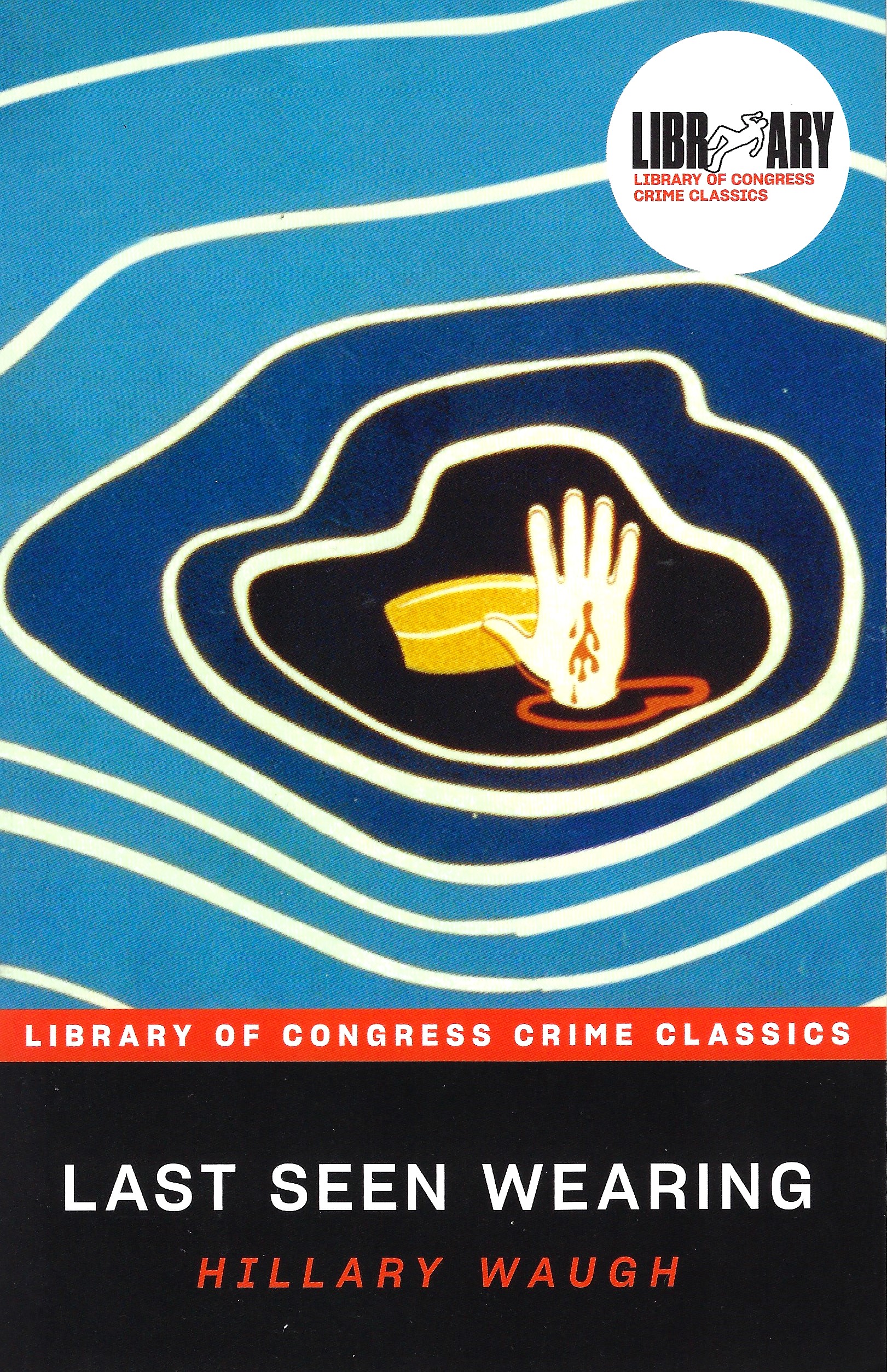
Last Seen Wearing by Hillary Waugh

The story starts with the disappearance of a young female college freshman, Lowell Mitchell. The college she attends is in Bristol, Massachusetts, a fictional small town near Boston, Massachusetts. She goes missing on a Friday in early March 1950 after attending a morning class. Once the college dean ascertains that she is missing, the police are called in to investigate. The small police department in Bristol has less resources and less men to assign to the case than a big city police force. The press and the public are soon pressuring them for a solution, and Lowell's distraught parents also come to town. Published in 1952.


A Novena for Murder by Sister Carol Anne O'Marie

This is a very cozy mystery starring a nun as an amateur sleuth. Sister Mary Helen has retired at 75 and is sent to Mt. Saint Francis College for Women in San Francisco. Shortly after she arrives the body of a professor at the school is found, following an earthquake. The police blame the wrong person, in Sister Mary Helen's opinion, so it is up to her to find out what happened. The setting in San Francisco is nicely done, and there is an interesting subplot involving Portuguese immigrants who have been helped to enter the US and are now students or workers at the college.


Wednesday, March 31, 2021

Reading Summary for March 2021

I read eight books in March, in addition to short stories from various sources. One of the books was nonfiction, and the remaining were crime fiction. Of the crime fiction books I read in March, four were vintage mysteries (before 1960) and three were contemporary novels. This was another month where I read three books by Agatha Christie, all in the Hercule Poirot series. I am very close to finishing all the novels in that series. 


Nonfiction / Self Help

Essential: Essays by The Minimalists (2012) by Joshua Fields Millburn and Ryan Nicodemus

This book could be considered self help or personal development, with a little bit of philosophy thrown in. The authors of this book have a blog, The Minimalists, which has been going for over ten years now. If you are at all interested in minimalism, this book may be interesting. 


Crime Fiction

Cat Among the Pigeons (1959) by Agatha Christie

This novel in the Hercule Poirot series is set primarily at the prestigious Meadowbank School for Girls in England, but the action begins with international intrigue in the fictional country of Ramat. I enjoyed the story. My review is here.

Three Act Tragedy (1934) by Agatha Christie

This is the ninth Hercule Poirot novel, following Murder on the Orient Express. There is a large cast of characters, but the main ones are the renowned actor, Sir Charles Cartwright, now retired; Mr. Satterthwaite, his friend; Dr. Bartholomew Strange, a specialist in nervous disorders; and Miss "Egg" Lytton Gore. The gentlemen are all older; Miss Lytton Gore is a much younger friend. The structure is like a play; the first act is Suspicion, the second act is Certainly, and the third act is Discovery. This began too slowly for me but I ended up liking it overall.

Dead Man's Folly (1956) by Agatha Christie

This was the third Hercule Poirot novel that featured Ariadne Oliver, the mystery writer, as a character. In this case, she has been invited to run a Murder Hunt game for the village summer fête, and Poirot is invited to give the prizes away. Miss Oliver has a key role in the story, but she shows up at the beginning, fades into the background for a good while, and then comes back to help a bit at the end. As always, a good read, but not one of Christie's best.


I Hear the Sirens in the Street (2013) by Adrian McKinty

This is the second book in the Sean Duffy series set in Belfast in the early 1980's, during the Irish Troubles. I read this for Reading Ireland Month at 746books. Based on these two books, it is a very good series. My review is here.

The Secret Place (2014) by Tana French

This is the fifth book in Tana French's Dublin Murder Squad series and my second read for Reading Ireland Month.  I have enjoyed all the books in the series, so far. My review is here.

Stage Fright (2003) by Christine Poulson

This is the second book in a series about academic Cassandra James, the head of the English Department at Cambridge University's St. Ethelreda's College. In this one, the story centers around a stage production of East Lynne. I loved this story; the characters are fantastic, the pacing is good, and there is just enough tension. See my review here.


The Rubber Band (1936) by Rex Stout

This is the third book in the Nero Wolfe series, and I have read it several times. This time I read it in preparation for the 1936 Club and will be reviewing it soon.


Friday, March 19, 2021

Stage Fright: Christine Poulson

 Description from Christine Poulson's web site ...

During her maternity leave, Cambridge academic Cassandra James gets involved in a production of EAST LYNNE. There is as much drama behind the scenes as there is on stage. The director is desperate to revive his flagging career. The maker of a fly-on-the-wall documentary is equally desperate to launch his. The crisis is reached when the leading lady disappears before the first night. Cassandra thinks it is more than stage fright, for Melissa has left six-month-old Agnes behind. Cassandra’s struggles to uncover the truth lead her deeper and deeper in a maze of illusion and deceit. Someone close at hand is not what they seem. Cassandra and her baby are in grave danger . . .

Professor Cassandra James is the head of the English Department at Cambridge University's St. Ethelreda's College. As this book starts, she is working with a theater group that is putting on a version of East Lynne, a Victorian sensation novel by Ellen Wood. Cassandra has rewritten the play to modernize it, and thus is taking part in the rehearsals. Shortly before opening night, the leading lady disappears. 

Melissa, the leading lady, is Cassandra's friend. They have bonded because their babies were both born prematurely at the same time and were in the hospital together. Thus when Melissa disappears, her husband Kevin (also the director of the play) calls Cassandra, thinking she may know something about her disappearance. He has to worry about his wife, the care of their infant daughter, and how to continue with the play, all at the same time. And he is suspected by the police when Melissa isn't located quickly.

My thoughts:

I loved everything about this book. Cassandra narrates the story. She seems like a real person, with faults and fears. She also is portrayed well as the mother of a young baby. Sometimes it seems like in fiction the child disappears and you don't get the feeling of the mother / child bond or the responsibilities that go with it. You always know that the baby comes first with Cassandra, and also see the fatigue and concerns of a 39-year-old new mother. 

Cassanda lives on the fens near Cambridge, a beautiful setting that is used very well. Kirkus described this book as "an academic cozy with attitude." There isn't a lot of violence but plenty of tension, which builds towards the end. I was surprised by the resolution of the story, and thought it was very effective.

The theatrical setting is an added bonus, with descriptions of the restored theatre, the rehearsals, and the way the play seems like it will never come together and then it does at the end. 

I have to admit that I did not know much about East Lynne, the novel or it stage and film versions. So of course I looked it up and that was interesting too.

This is the second book in a series of three. You can read and enjoy this one without reading the first one, but I do recommend reading the first one, Murder is Academic. They are both excellent books, in a lovely setting. 


This book fits in with the theme of Reading the Theatre at Entering the Enchanted Castle. Check out more on that topic here.


Also see reviews of Stage Fright at Clothes in Books, I Prefer Reading, and Reviewing the Evidence.


 -----------------------------

Publisher:   Thomas Dunne Books, 2005 (orig. pub. 2003)
Length:       240 pages
Format:      Hardcover
Series:       Cassandra James, #2
Setting:      Cambridge
Genre:       Mystery
Source:      I purchased this book.


Friday, July 3, 2020

What did I read in June 2020?


I read 10 books in June. Half were crime fiction, half were nonfiction or other genres. Some of my reads were for the 20 Books of Summer list or for my Venture Forth Summer Reading prompts, but four were spur of the moment reads. Four books were published in 2018, 2019, or 2020, and that is very unusual for me. 

Only three books were from my TBR pile. One was borrowed from my son, one from my husband. The remainder were new purchases in 2020.

I am not sure I am happy with the low number of vintage or older mysteries I am reading, but I had a great reading month overall.

Nonfiction

North Korea Journal (2019) by Michael Palin
This is a day by day diary of Michael Palin's visit to North Korea for a travel documentary. We watched the documentary after we had all read the book. I knew little about North Korea. The documentary was not an in-depth analysis, but what I learned in this book and the documentary was an eye-opener for me. It was a good read. 
Flu (1999) by Gina Kolata
The subtitle of this book is "The Story of the Great Influenza Pandemic of 1918 and the Search for the Virus That Caused It." There is much more time spent on the search to find a specimen of the virus strain in the years following the pandemic than on the pandemic itself. I cannot fault the book for that since it is plainly stated on the cover, but I did expect more time spent on the events in 1918 than on medical research during the next eight decades. Don't get me wrong, it is all very interesting and well written, a compelling read. I am now reading The Great Influenza by John M. Barry, published in 2004.

Historical Fiction

Marking Time (1991) by Elizabeth Jane Howard
The Cazalet Chronicles is a series of five books that follow the members of one family from 1937 just prior to World War II through 1957. The first book, The Light Years, covers 1937-1938. There is large cast; the parents plus four children (three brothers, one unmarried sister) and the grandchildren, who range from 5 or 6 to teenage at the start of the series. Marking Time begins in September 1939 and ends in winter 1941. It focuses most on the teenage grandchildren, telling the story from their point of view. Most of the family is living outside of London due to the bombing, although the oldest son is running the family business in London. I am enjoying this series and hope to do a post on the first two books soon.

Science Fiction

The Consuming Fire
 (2018) by John Scalzi

This is the second book in a science fiction trilogy about an empire of worlds connected by travel via The Flow. My review of the first book in the series, The Collapsing Empire, is here. I enjoyed this sequel just as much as the first and will be reading the third book soon.

Dragonsdawn (1988) by Anne McCaffrey

I am new to the Dragonriders of Pern series. The series can be read in chronological order or publication order. I guess you could just hop around but I would not. Richard Robinson at Tip the Wink explains the differences in his post Reading Pern. Dragonsdawn is the first novel chronologically and it worked well as a starting place for me. 

Crime Fiction

Slight Mourning (1975) by Catherine Aird
#6 in the Inspector Sloan series. Inspector C.D. Sloan is not a flashy policeman. He quietly investigates crimes with the "help" of his usual sidekick Constable Crosby. In this story, they look into the death of a man who dies in a car crash after a dinner party. I plan to read all of the books by Catherine Aird that I can find. I think this is the first time we meet Sloan's wife. I do like to know a bit about a policeman's personal life. 


The Ivory Dagger (1950) Patricia Wentworth

#18 in the Miss Silver series. For those not familiar with the Miss Silver mysteries, Maud Silver is an elderly sleuth. The stories are similar to the Miss Marple series but Miss Silver is actually a private detective. I enjoy these stories. My review here.

An Air That Kills (2019) by Christine Poulson

#3 in the Katie Flanagan series. Flanagan is a  medical researcher and this latest book in the series is very topical, about problems in a lab where research on the influenza virus is taking place. It is a fantastic book, I loved it. My review here.


Aunt Dimity's Death (1992) by Nancy Atherton

Lori Shepherd thought that Aunt Dimity was a fictional character that her mother invented for bedtime stories when she was a child, until she gets a letter from a law firm telling her that she is named in Dimity Westwood's will. In order to get her legacy, Lori has to go to Dimity's cottage in England and research the letters between her mother and Dimity. This is a very light read and not much mystery to it but I did enjoy it and I may read more in the series. (There are now 24 books.)
 

The Last Tourist (2020) by Olen Steinhauer

#4 in the Milo Weaver series, which was originally intended to be a trilogy. The first three books were published in 2009, 2010, and 2012, and eight years later Steinhauer adds a further story. When the series starts, Milo Weaver is a "Tourist," working for the Department of Tourism, a clandestine group of CIA-trained assassins. I liked this one. Olen Steinhauer cannot write a bad book in my opinion. But Books 1 and 3 in the series were the best ones.


Thursday, June 25, 2020

An Air That Kills: Christine Poulson

This novel continues the series of medical thrillers starring Katie Flanagan. And this latest book in the series is very topical.

From the book cover:
It is only a matter of time before there is a flu pandemic with the potential to kill billions. Or so wealthy entrepreneur Lyle Linstrum believes. That is why he is funding research into transgenics – the mechanism by which viruses can jump the species barrier – at a high security lab on a tidal island off the North Devon coast. 
A suspiciously rapid turnover of staff has him worried. He sends in scientist Katie Flanagan as an undercover lab technician. Something is clearly very wrong, but before Katie can get to the bottom of what is going on, a colleague is struck down by a mysterious illness.
Katie has just recently returned from a job at a research station in Antarctica. She has no job and no prospects for one at the moment, so when Lyle mentions the problems at the research lab, she volunteers for the undercover job. There are objections, but they work them out, and she gets a quick course in taking on a new identity. 


Poulson excels in all areas, setting, plotting and characterization. The plot moves along briskly. The story is intense and there is a sense of unease from the first day Katie arrives at the lab. The setting on an isolated island is beautiful but sometimes creepy. Each new person we meet on the island is under suspicion. Each is interesting in their own way, some more likable than others.

I like that a consistent set of secondary characters has been maintained over the three books in the series so far. Katie is close friends with Daniel and Rachel Marchmont and their young daughter, Chloe and has previously worked with Lyle Linstrum, scientist, venture capitalist, and Texas rancher. This group of supportive friends makes the series seemed more based in reality than some.

I also liked the brief training period that Katie undergoes to get tips on undercover work. The trainer is very concerned about letting an inexperienced person go into that situation. Thus the undercover work is handled very realistically.

This series just gets better and better. So I am glad to hear that a fourth book centered around Katie Flanagan is in the works. There is a new challenge for Katie in each book, but she still seems like a real person with a real life, real issues, not a superwoman.

Although there is continuity between the books in the series, each can be read as a standalone. I highly recommend this book and this series.

See my reviews of the first two books in the series, Deep Water and Cold, Cold Heart.

Also see other reviews of An Air That Kills...
Moira's review at Clothes in Books and Kate's review at crossexamingcrime.


 -----------------------------

Publisher:  Lion Hudson, 2019
Length:      267 pages
Format:     Trade paperback
Series:      Katie Flanagan, #3
Setting:     UK
Genre:      Medical thriller
Source:     I purchased my copy


Monday, June 1, 2020

20 Books of Summer 2020


This is my fifth year of joining in the 20 Books of Summer reading challenge. It is very flexible. You can go for 15 Books of Summer or 10 Books of Summer if 20 is too much to commit to. Books can be substituted along the way. And that is fine.

The event is hosted by Cathy at 746 Books. The description is here. This is her list. And the links for those joining in are HERE.

This year, for this event, summer starts June 1st and ends September 1st. I finished my list last summer so I will go into this optimistically. Of course, part of the intent is to review the books read and that is never going to happen with me, but still, I enjoy reading them all.

Here is my list:

Crashed (2010) by Timothy Hallinan
#1 in the Junior Bender series. Set in Los Angeles.

The Grand Sophy (1950) by Georgette Heyer
Regency romance.

Tripwire (1999) by Lee Child
#3 in the Jack Reacher series.

A Trick of the Light (2011) by Louise Penny
#7 in the Chief Inspector Armand Gamache series

The Way Some People Die (1951) by Ross Macdonald
#3 in the Lew Archer series

The High Window (1942) by Raymond Chandler
#3 in the Philip Marlowe series.

Marking Time (1991) by Elizabeth Jane Howard
#2 in the Cazalet series


The Provincial Lady in Wartime (1940) by E.M. Delafield
#4 in the Provincial Lady series

Buddha's Money (1998) by Martin Limón 
#3 in the George Sueño and Ernie Bascom series, set in South Korea in the 1970s

Fall of a Cosmonaut (2000) by Stuart Kaminsky
#13 out of 16 books in the Inspector Porfiry Rostnikov series, set in Moscow, Russia (usually)

Shooting at Loons (1994) by Margaret Maron
#3 in the Judge Deborah Knott series, set in North Carolina

Other Paths to Glory (1974) by Anthony Price 
#5 in the David Audley series (spy fiction)

The Women in Black (1993) by Madeleine St John 
Historical fiction set in 1950s Australia

The Absent One (2012) by Jussi Adler-Olsen
#2 in the Department Q series, set in Copenhagen, Denmark

Woman with a Blue Pencil (2015) by Gordon McAlpine
A standalone historical mystery with a unique structure.

An Air That Kills (2019) by Christine Poulson
#3 in the Katie Flanagan series. Katie is a medical researcher.

American Spy (2019) by Lauren Wilkinson
Espionage fiction.

Young Bess (1944) by Margaret Irwin
#1 in the Elizabeth I trilogy

The Consuming Fire (2018) by John Scalzi
#2 in the Interdepency Trilogy (science fiction)

Dragonsdawn (1988) by Anne McCaffrey
A book in the Pern series (science fiction / fantasy).

Saturday, December 1, 2018

Six Degrees of Separation from A Christmas Carol to Mr. Ive's Christmas


The Six Degrees of Separation meme is hosted by Kate at booksaremyfavoriteandbest. The idea behind the meme is to start with a book and use common points between two books to end up with links to six other books, forming a chain. Every month she provides the title of a book as the starting point.

The starting point this month is A Christmas Carol by Charles Dickens, thus this is a perfect first post for December. I am sure I have read this story long ago, but then maybe I am just familiar with film adaptations. (My favorite is Scrooged with Bill Murray.) I do have the illustrated edition pictured here, and I will be reading it this month.

For my first link I will make the obvious connection, another book with a Christmas theme.


The Shortest Day by Jane Langton is set in Cambridge, Massachusetts, where Homer and Mary Kelly are teaching a class at Harvard University. Mary is participating in the annual Christmas Revels when a young singer in the event dies in an automobile accident. When other deaths follow, Homer resists getting involved, even though he was once a homicide detective.


I next link to another book featuring an academic setting ... Murder is Academic by Christine Poulson. The UK title is Dead Letters. This is the first book in Poulson's Cassandra James series. Cassandra becomes the Head of the English department at St. Etheldreda's College at the University of Cambridge, after the former Head, a close friend, dies. This is one of my favorite academic mysteries.

I move on to another book set at the University of Cambridge, The Cambridge Theorum. The main character, Derek Smailes, is a police detective assigned to investigate the death of an undergraduate. It is a combination of a police procedural and an espionage novel.


My next choice would be The Becket Factor by Michael David Anthony, which also includes elements of espionage with another subgenre, this time a clerical mystery. Published in 1990, politics, local and national, are also touched on. The main setting for this book is a cathedral, Canterbury Cathedral, and its surroundings, which leads me to another book set in a Cathedral close.

Close Quarters by Michael Gilbert was my first exposure to life in a Cathedral close, which made it doubly interesting. That book was published much earlier, in 1947, and is very much a traditional puzzle-type mystery.


My last book in the chain has even more of a religious emphasis, and takes us back to the Christmas theme. Mr. Ive's Christmas by Oscar Hijuelos is a novel that tells the story of a man's life and the grief he suffers when his son dies in a senseless robbery a few days before Christmas. Mr. Ives' religious beliefs and faith are at the center of this book, but family relationships and friendships are also stressed.

My chain this month began and ended with Christmas stories, and in the middle there were books with academic or ecclesiastical settings. I look forward to seeing the direction of other Six Degrees posts.

Sunday, July 15, 2018

Murder is Academic: Christine Poulson

After reading Christine Poulson's most recent mysteries (Deep Water and Cold, Cold Heart) I wanted to go back and read her first series. Murder is Academic is the first book in the Cambridge Mystery series, starring Cassandra James.

In this debut novel, Poulson has set her story at St. Etheldreda's College at Cambridge. Cassandra is a professor of English, and she finds the head of her department drowned in a pool, surrounded by exam papers.

From the prologue...
It’s hard now to remember what first struck me as not being quite right, but I think it was the garden sprinkler. 
... As I walked down the path I heard the gentle swishing without being able quite to identify what the sound was. Then I turned the corner of the house and saw the water falling in slow rhythmic veils. The ground underneath the sprinkler was sodden, the grass almost submerged. It must have been on for hours, all night probably. You’d have to know Margaret as well as I did to understand why that was odd. She ran a tight ship in college and it was the same at home. I’d often thought it was just as well that Malcolm was fanatically tidy, too. They would have driven each other mad otherwise
Margaret Joplin's death appears to be accidental, but later more and more strange and unsettling developments point to the possibility of murder.

Soon Cassandra's boss asks her to take over the position as the Head of the English department. And with that new position, she has the stress of pushing not only herself but all  members of the small department to complete some research to satisfy a Research Assessment Exercise that is coming up.


One of the things that Christine Poulson does really well is setting and atmosphere. That is true in her two most recent books, one set in Ely in Cambridgeshire, in the world of pharmaceutical research; one set partially at a research station in the Antarctic. In Murder is Academic, in addition to the college setting, we have plagiarism, séances, the pressures to publish research. And you will notice that research is a prominent theme in all of these.

And on top of that, she creates characters that I care about. Cassandra is shaken up by the death of her friend and colleague. She is in a tentative romantic relationship with Stephen, an attorney, and she doesn't know how  far she  wants that to progress. Stephen; the department's office assistant, Cathy; the various quirky academics in the department -- all of those characters felt real and believable to me.

The plot is intricate, but with the setting in academia, among scholars and book lovers, I enjoyed the twists and turns that it takes.  I had no complaints. And I loved the ending.

The UK title of this book is Dead Letters.  I have the 2nd book in the series, Stage Fright, on order.

See also these posts at Confessions of a Mystery Novelist..., Clothes in Books, and I Prefer Reading.


 -----------------------------

Publisher:   Minotaur Books, 2004 (orig. pub. 2002)
Length:       240 pages
Format:      Hardcover
Series:       Cassandra James, #1
Setting:      Cambridge
Genre:       Mystery
Source:      I purchased this book.

Sunday, July 1, 2018

Reading Summary for June 2018

In 2018, I have been reading more each month (than in previous years) and it still amazes me. This month I read 10 books and they were all good reads. And some of them were spectacular. As usual, most of the books were crime fiction, but I did read two books that were not mystery or crime related. Eight of these books were books on my 20 Books of Summer list.

My two non-mystery reads in June were ...

Auntie Mame (1955) by Patrick Dennis
A story about a young boy raised by his aunt after his father dies. The book reads like connected short stories, each highlighting a different stage in the boy's growing-up years.  It is wacky and entertaining, definitely not my usual fare, and I enjoyed almost every story. The story has been adapted for film and as a play.
Tales of the City (1978) by Armistead Maupin
I really have no idea how I missed this series over the years. Set in San Francisco, California, and very close to the year I visited the city the first time. Not mystery related, so that probably has something to do with it. I did learn about the books in 2014 at Clothes in Books, yet still wasn't tempted to try one. This month the time was right. It took me a while to get into the story, but I ending up loving the book and planning to read more in the series.
And now on to the eight crime fiction reads:

The Bone Garden (2003) by Kate Ellis
This is the fifth book in a series that has an archaeological theme and has two mysteries in each novel, one past, one in the present. This one had interesting characters and a decent story, but I did have some problems with it. Many readers are very happy with the series though, so if you haven't tried it, I do recommend it.

An Expert in Murder (2008) by Nicola Upson
Mystery novelist Josephine Tey is the sleuth in this one. I am not sure how much the sleuth in this book resembles the real Josephine Tey (whose real name was Elizabeth Mackintosh), but I did find the story compelling and enjoyed the setting, so I will read more of this series.
Death in the Garden (1995)
by Elizabeth Ironside
A historical novel, with story lines in two different time periods. In 1925, Diana Pollexfen was accused of killing her husband, but found innocent. Sixty years later, her grandniece decides to find out what really happened. Both stories and the way they tie together are excellent, and the writing is very, very good.

Murder is Academic (2002) by Christine Poulson
This is the first book in Poulson's Cambridge Mystery series, starring Cassandra James. After reading Poulson's most recent mysteries (Deep Water and Cold, Cold Heart) I wanted to go back and read her first series. That was a good decision; this was a lovely book, with interesting, believable characters and a great ending. The UK title is Dead Letters.
The Terra-Cotta Dog (1996) by Andrea Camilleri
The second Inspector Montalbano mystery, set in Italy, part of a long-running series. Montalbano finds a cave filled with artifacts and the bodies of two young lovers who have been dead for 50 years. I had read the previous book in the series but had forgotten how much of an independent loner the inspector is. The story is very complex.
White Sky, Black Ice (1999) by Stan Jones
This series stars Nathan Active, an Alaska state trooper, half Inupiat and half white, assigned to the remote village of Chukchi. The story has an interesting and unusual setting and the plotting is fine, but it is the character that I want to know more about. And it is that element that will bring me back to read more books in the series. 

Thunderball (1961) by Ian Fleming
This is the second James Bond book I read this year. It is the first of three novels featuring Ernst Stavro Blofeld, head of the criminal organization SPECTRE. As always, a good read.

Faithful Place (2010) by Tana French
I read this for the European Challenge for Ireland. Set in Dublin, featuring Frank Mackey, a Dublin detective working in the Undercover department. Frank returns to his old neighborhood and the family he left 22 years earlier to investigate a possible crime. Another great story by this author, my favorite of her books ... so far.

Monday, May 28, 2018

20 Books of Summer 2018

A few days ago I was wondering if the 20 Books of Summer challenge would return in 2018. Then I saw Jean's list at Howling Frog Books, and I immediately started thinking about my list for this summer. The originator of the challenge is Cathy at 746 Books. Check out Cathy's list for more information.


This is a challenge of sorts but it is very flexible and I have enjoyed it for the last two years. For this event, summer starts June 1st and ends September 3rd. You can go for 15 Books of Summer or 10 Books of Summer if 20 is too much to commit to. Both years I participated I did not finish my list in the Summer, omitting 2 or 3 books, and I read others that appealed to me at the time. And that is fine.

And the absolute best part is making the list, even if it means narrowing down a list of 40 books to 20. So here is what I chose.


A Study in Scarlet (1887) by Arthur Conan Doyle
This brief book, barely over 100 pages, introduced Sherlock Holmes and Dr. Watson, and it will be the first novel in this series that I have read.
Death in the Clouds (1935) by Agatha Christie
A woman is murdered with the venom-dipped dart of a South African blow-gun on a routine flight over the English Channel. A Hercule Poirot mystery.
The Bigger They Come (1939) by A.A. Fair (Erle Stanley Gardner)
The first book in the Donald Lam and Bertha Cool series.
Murder with Mirrors (1952) by Agatha Christie
Jane Marple visits Carrie Louise at her Victorian mansion, Stoneygates, at the request of an old friend. UK title is They Do It with Mirrors.
Auntie Mame (1955) by Patrick Dennis
A story about a young boy raised by his aunt. It has been adapted for film and as a Broadway play.
Thunderball (1961) by Ian Fleming
The 9th James Bond book, set in the Bahamas. Ernst Stavro Blofeld, head of the criminal organization SPECTRE, makes his first appearance.
The Limbo Line (1963) by Victor Canning
Starring British Secret Service agent Richard Manston, who shows up later in Canning's Rex Carver books.
Death in the Garden (1995) by Elizabeth Ironside
A historical novel, with story lines in two different time periods. In 1925, Diana Pollexfen was accused of killing her husband, but found innocent. Sixty years later, her grandniece decides to find out what really happened.
The Terra-Cotta Dog (1996) by Andrea Camilleri
The 2nd Inspector Montalbano mystery, set in Italy, part of a long-running series. Montalbano finds a cave filled with artifacts and the bodies of two young lovers who have been dead for 50 years.
Starting Out in the Evening (1998) by Brian Morton
A novel about an aging author whose books are now generally forgotten, and a young female grad student who wants to a write her thesis about him. There is a movie based on the book starring Frank Langella.
Night Rounds (1999) by Helene Tursten
The second book in Helene Tursten's series featuring Inspector Irene Huss, set in Sweden. Her husband is a chef, and they have twin daughters and a dog. 
White Sky, Black Ice (1999) by Stan Jones
Starring Nathan Active, an Alaska state trooper assigned to the remote village of Chukchi. This will be my first experience reading this author.
Murder is Academic (2002) by Christine Poulson
This is the first book in Poulson's Cambridge Mystery series, starring Cassandra James. The UK title is Dead Letters
The Bone Garden (2003) by Kate Ellis
This is the 5th book in a series that has an archaeological theme and has two mysteries in each novel, one past, one in the present. I read the first one years ago but wasn't encouraged to continue with the series. Yet I have heard good things about the series and it now has a total of 22 books.
Gasa-Gasa Girl (2005) by Naomi Hirahara
The sleuth in this book is Mas Arai, a Japanese-American gardener in Los Angeles. This story takes him to New York, where his daughter lives. The 2nd book in the series.
The Night Watch (2006) by Sarah Waters
I was attracted to this book by the subject matter (World War II, London, 1941-1947)  but put off by the length. Now I am going to give it a try.
An Expert in Murder (2008) by Nicola Upson
Mystery novelist Josephine Tey is the sleuth in this one. I was dubious of the premise but I have heard good things about the books so why not see if I like it?
The Diggers Rest Hotel (2010) by Geoffrey McGeachin
Set in post-World War II Australia, the hero is Charlie Berlin, who rejoins the Melbourne police force after the war. This book won the 2011 Ned Kelly Award.
The Cold Cold Ground (2012) by Adrian McKinty
Set in Northern Ireland in 1981, at the height of the Troubles. Starring Detective Sean Duffy, a Catholic policeman.
Follow Her Home (2013) by Steph Cha
Juniper Song is a young female Korean American amateur detective in LA, who is an admirer of Raymond Chandler's Philip Marlowe. The series sounds like it could be fun.
Moskva (2016) by Jack Grimwood
I have read two of this author's books published as John Courtenay Grimwood and I was very impressed with them, so when I heard he had written a cold war spy thriller set in Russia, I had to read it.
 

Since this list is so long I won't even comment on its makeup, but since I have added dates you can see what decades I am reading from.