Showing posts with label Gladys Mitchell. Show all posts

Sunday, May 7, 2023

Books Read in March and April 2023


I skipped a reading summary for March so this is a combo summary for March and April. I read ten books in March and five in September. In April, all the books I read were crime fiction. In March, I read a biography, a graphic novel, two books of general fiction, and a fantasy novel, in addition to crime fiction novels. 


Nonfiction / Biography

The Sisters: The Saga of the Mitford Family (2001) by Mary S. Lovell

After reading The Six by Laura Thompson, I felt like I could benefit from another look at the Mitford family. I hoped for more information about Jessica, Pam and Deborah. And I definitely got that. Also more about their parents, although their brother Tom was only touched on. See my full review here.

Graphic novel

A Man and His Cat, Vol. 3 (2019) by Umi Sakurai (Writer and Artist) 

There are 10 volumes in this Japanese manga series. In the first volume, a widower, Kanda, seeks a cat as a companion, and finds his perfect match at a pet store. The man falls in love with his new cat and names him Fukumaru. The stories in the first and second volume are mostly about Kanda learning to live with and take care of a cat. In the third volume, some earlier relationships in his life are explored. I will be reading more in this charming manga series. See my review of volumes 1-3.


General Fiction

Mrs. Palfrey at the Claremont (1971) by Elizabeth Taylor

Mrs. Palfrey, a widow living on a fixed income, has just moved into an extended residence hotel in London. There are a small number of older residents who are living there permanently. She is proud and trying to fit in, and ashamed that she has no one to visit her.  It explores the time in life when people are alone and moving toward a time when they need more care, so it is not very upbeat but also not a complete downer. It was a very good book and I will be looking for more by this author.

Dear Life: Stories (2012) by Alice Munro

I started reading this book of short storied in November 2022 and finished them in March of this year. There are fourteen stories in the book. Some of them are exceptionally good and I liked the stories overall very much. Alice Munro is a Canadian author and I liked the Canadian setting. I will be reading more of her short stories. See my posts on the first eight stories and the next six stories.


Fantasy

Assassin's Apprentice (1995) by Robin Hobb

I haven't read a lot of fantasy, and certainly not a lot of high fantasy. This first book in the Farseer Trilogy by Robin Hobb has a medieval fantasy setting.  I took  a chance on this one because of Cath's review of The Mad Ship from the Liveship Traders Trilogy by the same author. I loved it and I will be reading more of the trilogy. My review is here.


Crime Fiction

Time to Murder and Create (1976) by Lawrence Block

This is the second book in the Matthew Scudder series. I read the first book in the series back in 2011 and it took me this long to return to it. My goal is to read as many books in the series as I can; there are 17 books. In this novel, Matthew is hired by a criminal to avenge his death. The criminal, who has been supporting himself with blackmail, supplies Matthew with information on his current victims, as he suspects one of them of planning to murder him. I enjoyed this book and read it very quickly, but I suspect that the series get much better as it goes along.


Baby, Would I Lie? (1994) by Donald Westlake

This book is the second book in a two-part series about Sara Joslyn and Jack Ingersoll. Both are journalists, and they are covering the trial of country singer Ray Jones for the rape and murder of Belle Hardwick. See my review here.


The Mask of Memory (1974) by Victor Canning

The Mask of Memory is the third book in the Birdcage series. The series is about a covert security group in the UK, a branch of the Ministry of Defense. In this book, one of the top agents is leading a double life. He is married to a woman who lives in North Devon; she does not know what he does for a living and sees him infrequently. No one in his group knows that he is married, or of the existence of the home in North Devon. I enjoyed the first two books in the series and this one was also very good. I will be moving on to the fourth book in the series, The Doomsday Carrier, soon.


4:50 from Paddington (1957) by Agatha Christie

This is the 7th Jane Marple mystery. Jane Marple's friend Elspeth McGillicuddy sees a man strangling a woman in a passing train. She tells the railway officials and later the police, but no one can find any evidence of a crime, and they don't really believe her. Jane Marple decides to investigate. After finishing almost all the Hercule Poirot novels in 2021, I now want to finish up the Miss Marple series.


Murder in a Nunnery (1940) by Eric Shepherd

The first of two short novels set in Harrington Convent. I read this book for the 1940 Club organized by Simon at Stuck in a Book and Karen at Kaggsy's Bookish Ramblings. My review is here.


Bad Faith (2002) by Aimée and David Thurlo

Bad Faith is the first book in a series about a nun who solves mysteries. The setting is in New Mexico. Sister Agatha is an extern nun who deals with the outside world for her order. I liked the mystery but the really interesting part was reading about the cloistered nuns and their daily life. There are only six in the series and I would definitely read more of them if I have the time.


The So Blue Marble (1940) by Dorothy B. Hughes

This book was Dorothy B. Hughes' debut mystery novel. It is unlike any other book by Hughes that I have read. In a Lonely Place and Ride a Pink Horse are noir novels, with a much more serious tone. This one is also on the noir side but more fantastical, and requires a good bit of suspension of disbelief. See my review here.


The Blind Man of Seville (2003) by Robert Wilson

Although I had decided earlier to stop reading Robert Wilson's novels because most of them had too much graphic violence and sex for me, I took a chance on this book, because it is set in Seville, Spain. This book did have those elements, but I was glad I took a chance on the book. The setting and character development was very good.


The Echoing Strangers (1952) by Gladys Mitchell

This is the 25th novel in Gladys Mitchell's Mrs. Bradley series. There are two plot threads. The first takes place mostly in the village of Wetwode on the River Burwater, where Francis Caux lives with his guardian, Miss Higgs. A murder victim is discovered near to the riverside bungalow that Francis lives in. The second follows a separate murder investigation in the village of Mede, where Derek Caux, Francis's twin, lives with his grandfather, Sir Adrian Caux. I read this book as part of a group read hosted at Jason Half's blog. The first of four posts about the novel is here.


Body Line (2011) by Cynthia Harrod-Eagles

I used to love the Bill Slider mystery series but got side-tracked. In April, I decided to pick it up again with Body Line, the 13th book in the series. I had just finished a very violent and dark police procedural and I wanted to go in the opposite direction. There is a strong focus on the lives of the two major characters (Slider and his partner Atherton) in addition to the investigation of the crime. I will be looking for the next in the series.

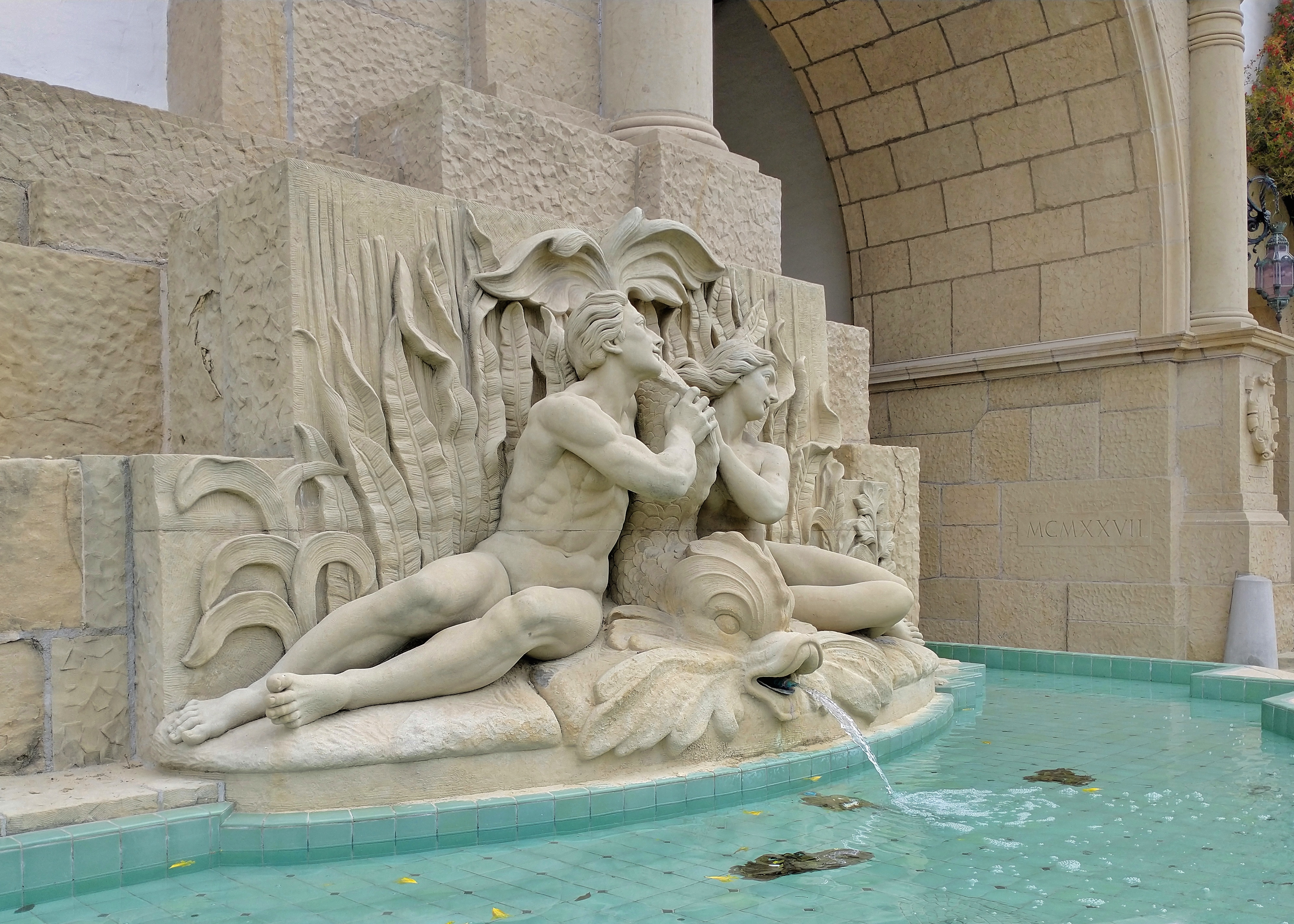


My husband was on jury duty for a few days recently. The images at the top and bottom of the post were taken at the Santa Barbara County Courthouse, while he was there. The courthouse building has lovely grounds and architecture. Click on the images for the best viewing quality.


Sunday, January 9, 2022

2021 Overview and Reading in December


2021 statistics ...

In 2021 I read 105 books. I usually aim at 84 books in a year, which would be seven books a month. In 2020 I read 113 books.

My reading continues to be focused on mystery novels. This year I read 69 mystery novels, which is less than last year. That group includes any historical mysteries and spy fiction I read. Of that total, 27 were published in 1960 or before, 26 were published between 1960 and 1999, 12 were published between 2000 and 2018, and only 4 were published in 2019-2021. The mysteries were divided almost equally between male and female authors. 

Other fiction reading was divided thus:

  • Science fiction: 7
  • Fantasy: 2
  • General fiction: 8
  • Historical fiction: 11

All of those numbers are up from last year, and I am pleased with that. I would like to read more science fiction in 2022.

I continued reading short stories every month, but I only completed one book of short stories. I have sampled stories from a lot of short story collections and anthologies, and I need to finish more of them this year. 

My nonfiction reading was much lower than last year. I only read 6 books in that genre. Of all the books I read, only 6 books were from my Classics List. That is another area I need to improve on. 


And now, on to books read in December 2021...


General Fiction

The Last Noel (2002) by Michael Malone

This book was set at Christmas and has a definite Christmas theme. It takes place in the small town of Moors, North Carolina. Noni (real name Noelle) is the daughter of the Tilden family, a rich and privileged family that has lived in the area for many years.  Kaye is the grandson of the Tilden's black maid, who has worked for the Tilden family for years. Kaye and Noni's relationship is viewed through twelve Christmases, starting in 1963 and ending in 2003. See review here.


High Rising (1933) by Angela Thirkell

This was one of the books set at Christmas, at least partially. I have been hearing about the Barsetshire series by Thirkell for years. At first I thought that they were not for me, but recently I became curious and decided I had to read one and I wanted to start at the beginning. I am glad I tried it, it was an entertaining read. I hope to continue the series, but there are 29 books in the series, so maybe that is a bit much. I will try to get through the books written during the war years, which is about half of them. 


Historical Fiction

Rules of Civility (2011) by Amor Towles

This is not a Christmas book, really, but the main story starts on New Year's Eve in 1937 and ends with a surprise Christmas gift two days before Christmas in 1938, so it felt like holiday reading to me. I loved this book. See review here.


Crime Fiction

Spence And The Holiday Murders (1977) by Michael Allen

This is the first book in the Detective Chief Superintendent Ben Spence series. It was an enjoyable read, the type of book I enjoy now and then, but it was a pretty standard 1970s police procedural. But is was set in the UK and around Christmas time, so a timely read.


Murder in the Snow: A Cotswold Christmas Mystery  (1950) by Gladys Mitchell

This book was originally published as Groaning Spinney, and it was the 23rd book in the Mrs. Bradley series. I read it as a part of a group read hosted at Jason Half's blog; there is commentary there from the group in four parts. It begins here and the final post is here.

As the subtitle above indicates, some of the action takes place at Christmas, when Mrs. Bradley is visiting her nephew and his wife, but the Christmas festivities are over very quickly. The investigation continues for months afterwards. I love the setting in the Cotswold and there are treks through the rural areas there. My only complaint is that the investigation drags on and on.


Pictures of Perfection (1994) by Reginald Hill

The 14th book in the Dalziel & Pascoe series. Pascoe is sent to a small village in Yorkshire to investigate the disappearance of one of their uniformed officers. Coincidentally, Sergeant Wield had just a few days previously stopped in the village on the way back from vacation and had a mild altercation with the missing village policeman. When he gets back from vacation, he is also sent to investigate, but neither of them finds any evidence of what has happened to the missing man. This entry in the series is Reginald Hill's version of a village cozy, and has much more humor than usual. 


Fortune Favors the Dead (2020) by Stephen Spotswood

This was Spotswood's debut novel and the first in the Pentecost and Parker series. The author is a fan of the Nero Wolfe series by Rex Stout and used it as inspiration in coming up with this detective duo. Since Rex Stout is my favorite mystery writer, I had to try the series. Lillian Pentecost is a successful private detective in her forties but she has multiple schlerosis and her health is failing. She hires Willowjean Parker, a young woman who ran off to work in the circus when she was 15, to be her assistant and offers to provide training in many areas. They are the perfect pair, and I loved the story. 


My husband took this photo at Mackenzie Park in Santa Barbara. The photo at the top of the post was taken at Lake Los Carneros located near Stow House in Santa Barbara County. Click on the images for best viewing quality.


Monday, May 3, 2021

Reading Summary for April 2021


I read ten books in April, although some of the books were ones I had started in February or March and finished at the end of April. I was happy with the mix. I read six crime fiction books, and five of those were published before 1970. 


Nonfiction / Essays

Ex Libris: Confessions of a Common Reader (1998) by Anne Fadiman

This is a wonderful book of essays, especially for people who love books, language and words. The author's family were all serious readers (her father was Clifton Fadiman), and her husband too, so many of the essays are related to books and reading. The first essay was titled "Marrying Libraries", and talks about when she and her husband combined their libraries after five years of marriage, rather than having some shelves for her books and some shelves dedicated to his books (and duplication of books).


General Fiction

The Lonely Passion of Judith Hearne (1955) by Brian Moore

The setting is Belfast in Northern Ireland, in the 1950s. Judith Hearne, plain and in her late thirties,  has just moved to a new room in a boarding house.   My full review is here.

The Pursuit of Love (1945) by Nancy Mitford

This was my book for the Classics Club Spin in April. Nancy Mitford was one of the Mitford sisters, and the characters in the family are based on members of her family. I haven't read much about that family yet so I had no idea of who was based on who, or how accurate it might be. The story is humorous but there are also serious moments and I was quite invested in the ending of the book. I liked it a lot, and thus will seek out others in the three book series.


Historical Fiction

Post Captain (1972) by Patrick O'Brian

This is the second novel in the highly acclaimed historical fiction series about Jack Aubrey (a naval officer during the Napoleonic Wars) and his friend Stephen Maturin (physician and naturalist). I enjoyed this one even more than the first book, probably because I had gotten used to the nautical jargon. Also, Jack and Stephen spend more time on land this time, and get involved with several women looking for husbands. I look forward to further adventures in this series.


Crime Fiction

Case for Three Detectives (1936) by Leo Bruce

This was one of the four books that I reviewed for the 1936 Club this month. It is a humorous mystery, poking fun at the Golden Age detectives created by Sayers, Christie, and Chesterton. Set in a country house, and surrounding villages, it is a lot of fun. My review is here.

Murder in Piccadilly (1936) by Charles Kingston

This was another book that I reviewed for the 1936 Club this month. Murder in Piccadilly tells the story of a young man, Bobbie Cheldon, who has expectations of inheriting the family estate and a large income when his uncle dies. The hitch is that his uncle, Massy Cheldon, is healthy and he could easily live another 20 years. This book provided a good picture of London in the 1930s, especially the less well-to-do London environments. My review is here.


The Clocks
(1963) by Agatha Christie

This month I read two later books in the Hercule Poirot series, published in the 1960s. In general they are not as good as earlier books but I still found them to be entertaining reads.

In The Clocks, a good number of the chapters are told via first person narration by Colin Lamb, a secret agent, who gets involved with a case of murder while following up on an espionage assignment. Colin visits his friend Hercule Poirot, and describes the crime. An older man was found dead in the sitting room of a blind woman's home, and the body was discovered by a young woman who had an appointment to do some stenographic work for the blind woman, Miss Pebmarsh. Colin challenges Poirot to solve the crime without talking to any witnesses himself, but just based on the facts of the case as brought to him by the investigators. So Poirot makes suggestions and Colin continues to visit him and discuss the case.

Hallowe'en Party (1969) by Agatha Christie

Overall Hallowe'en Party was less satisfying for me than most other mysteries by Christie, but I do love it when Ariadne Oliver shows up. Again she involves Poirot in a mystery by asking him to come help out.  One unusual thing in this story is that the murder victim was a child and children play a big part in the story.  

The Meaning of Night (2006) by Michael Cox

This is a Gothic tale of revenge, set in the 1850s, mostly in London but with a good bit of time spent at a lavish country estate, Evenwood. Edward Glyver is the main character and he believes he is rightful heir to the estate. Many readers loved this book; I did not. It took me two months to finish reading it, and I considered not finishing it many times. But after 400 pages (out of 700) I wanted to see if it would improve and how it all ended. I did like the last third of the novel, and I think that was because finally more is shared about the story and it is no longer a mystery as to what the whole thing is about.

Sunset over Soho (1943) by Gladys Mitchell

I read this book between April 5th and April 26th, and that is a long time for such a short book (192 pages). But this was a read along and I am very glad I read it that way. It was quite confusing, with a very complex structure, and having a group commenting on that element was very helpful. I loved the book because it was both written and set during World War II, mostly in or near London, with some seafaring scenes, including a chapter about Dunkirk. Just fantastic, and I will surely read it again. Unfortunately, it is only really affordable in the e-book edition. There are four posts at Jason Half's blog about this book and the group's thoughts, all in April 2021.


READING NEXT?

I started The Mirror & the Light by Hilary Mantel on April 28th. I think it may be a long slow read, because it is hard for me to follow the large number of characters and it is about 750 pages long. I am enjoying it so far.


I may be blogging a bit less for a while, and spending more time on gardening and other home maintenance tasks. Below is a photo of one of my geraniums in bloom this month. The photo at the top features a geranium in my front area with curly variegated leaves and multicolored flowers. Click on the images to enlarge.


Saturday, October 3, 2020

Reading Summary for September 2020

I am having a hard time believing that we are already into October and I am summarizing my reads for September. My reading changed a lot this year. It was partially due to Covid-19, I am sure but not only because of that. I think some of my challenges that I started the year with are not going to be completed and I doubt if I will push myself in the last three months to catch up. 

This month I read seven books. Four of the books were vintage mysteries, published in the 1930s, 40s, and 50s. Two of them were spy fiction, although they were very different books. And one of the books was science fiction. All of them were very good reads.


Science Fiction

The Last Emperox (2020) by John Scalzi

This is the last book in the Interdependency trilogy. The first book was The Collapsing Empire, which I reviewed here. I liked the 2nd and 3rd books in the trilogy even more than the first one.


Crime Fiction

The Way Some People Die (1951) by Ross Macdonald

This is the third Lew Archer book, and Lew is trying to find a missing woman for her mother. He tells the mother that this type of case is for the police; she doesn't want the police involved. The plot is very convoluted and the characters are great. My review here.


The Arms Maker of Berlin (2009) by Dan Fesperman

I could not decide whether this was spy fiction or just a thriller. Certainly intelligence agents are involved, and the thrills are low key. A history professor who specializes in German resistance during World War II gets mixed up with the FBI when his former mentor is arrested for stealing important documents. His work leads to exposure of wartime secrets and deceit, and includes visits to Bern, Switzerland and Berlin, Germany. I loved this book; it did have a slow start, but there is lots of action towards the end.


The Beast Must Die (1938) by Nicholas Blake

This is the 4th book in the Nigel Strangeways series. Frank Cairnes is a writer of detective fiction, a widower, and cannot accept that his only son is dead and the hit-and-run driver has never been found. The book starts with a journal where Cairnes describes his plans to find and kill the person who killed his son. Strangeways doesn't show up until about halfway through the book. My review here.


Laurels Are Poison (1942) by Gladys Mitchell

This is the 14th book in the Mrs. Bradley series, a series which totals 66 books. In this one, Mrs. Bradley is serving as Warden of Athelstan Hall at Cartaret Training College. She is there to investigate the disappearance of Miss Murchan, the previous Warden. I read this as part of a group read, hosted at Jason Half's blog. I enjoyed the book and will be reading more in this series.


American Spy (2019) by Lauren Wilkinson

This is a debut novel. It can be classified as spy fiction, but it is not only focused on espionage. The protagonist, Marie Mitchell, is black and female, and has been working for the FBI in the New York office. The story is set partially in New York, and partially in Burkina Faso, and it has an unusual structure, told in the style of a journal written for her young sons. It is an exploration of family dynamics and influences, and how the past shapes us. There are many flashbacks to Marie's childhood, her motivation for being a spy, and why she fits in that job so well. 


Voyage into Violence (1956) by Frances and Richard Lockridge

This is the 21st of 26 mysteries featuring Mr. and Mrs. North. I consider these mysteries to be light, fun reads. I don't want a steady diet of them, but they are great for mixing in with more gritty or serious reading. Over the course of the series, Pam and Jerry North have become good friends with Bill Weigand, New York City homicide detective, and his wife Dorian. In this book the two couples are taking a Caribbean cruise to Havana. A man is murdered and Bill is called on to investigate.


Sunday, July 20, 2014

A Hearse on May-Day: Gladys Mitchell

I am a newbie to reading the books of Gladys Mitchell. I expressed my desire to sample the writings of this prolific vintage mystery author, and Moira at Clothes in Books graciously sent me a copy of one of her books, with skeletons dancing on the cover.


To summarize Gladys Mitchell's contribution to crime fiction, I will quote from this overview at The Golden Age of Detection Wiki:
Mitchell wrote at least one novel a year throughout her career. Her first novel (Speedy Death, 1929) introduced Beatrice Adela Lestrange Bradley, a polymathic psychoanalyst and author who featured in a further 65 novels. Her strong views in social and philosophical issues reflected those of her author and her assistant, Laura Menzies, appears to have been something of a self-portrait of the young Mitchell.
Mitchell was an early member of the Detection Club along with G.K. Chesterton, Agatha Christie and Dorothy Sayers and throughout the 1930s was believed to be one of the "Big Three women detective writers", but she often challenged and mocked the conventions of the genre...
In addition to her 66 Mrs. Bradley novels Mitchell also used the pseudonyms of Stephen Hockaby (for a series of historical novels) and Malcolm Torrie (for a series of detective stories featuring an architect named Timothy Herring) and wrote ten children's books under her own name.
Spooky happenings (phenomena) appear to be fairly normal occurrences in Mrs Bradley stories by Gladys Mitchell. She often includes elements of witchcraft, the occult, or the supernatural. Yet the stories do not read like fantasies; they are fantastic, but firmly in the mystery genre. I don't think I am describing this very well, but this was my reaction to the book that I read: A Hearse on May-Day. 

This book is divided into two distinct parts. In the first part, Fenella Lestrange (niece of Mrs. Bradley) finds herself taking a detour to Seven Wells, a village she has never visited before. Once there, she gets involved in some very bizarre events. Her car breaks down even though it seemed to be running fine and she has to stay overnight. She is told repeatedly by the staff of the local inn that she should lock herself in her room and not stray outside, because it is Mayering Eve. Apparently this village is known for some very rambunctious behavior on that night. Of course, Fenella ignores their warnings and ventures out to find out what is going on. She encounters several very strange groups, some of them hostile, but does make her way safely back to her room.

Her car is repaired the next day, and she continues on her trip to her cousin's manor. She is travelling to their home to get married. The second half of the book covers Mrs Bradley's investigation into a murder that had occurred in Seven Wells shortly before Fenella's stay there, and whether the strange goings on that happened while she was there are related. This was not the best part of the book, as the progress was slow and at times made no sense to me.  Overall, however, I enjoyed this story, even though it was not my usual type of mystery read.

One of the themes in this book is May Day. Moira's post at Clothes in Books (May Day Special) and a post at Read Me Deadly (The Murderous Month of May) cover this in more detail. Also see reviews by Bev at My Reader's Block and Les Blatt at Classic Mysteries.

This book was published in 1972. Gladys Mitchell died in 1983 and the last Mrs. Bradley book was published in 1984. From what I read, her books were variable in quality (depending on the reader's perspective of course) and had a lot of variety in content and structure. I am looking forward to reading more of her output at various stages in her career. I have read that she was not published much in the US when she was alive; I guess that explains why I have not run into her books in earlier years and at the normal places I would pick them up (used book stores, before the internet) and book sales.

Another great resource on Gladys Mitchell's books and writing is Jason Half's The Stone House, A Gladys Mitchell Tribute site. It has a great bibliography, biography, and essays galore. I have read enough very positive reviews of Mitchell's unusual Mrs. Bradley series to recommend this book and others from the series. I haven't even gone into the eccentricities of Mrs. Bradley's character in this post, because they were not that evident in this book. I will save that for a later review.

 -----------------------------

Publisher:  Rue Morgue Press, 2012 (orig. pub. 1972)
Length:    158 pages
Format:    Trade Paperback
Series:     Mrs. Bradley Mystery
Setting:    small village, England
Genre:     mystery
Source:    a gift