Showing posts with label Spy Fiction. Show all posts

Tuesday, May 19, 2026

Books Read in April 2026


Basically in April I read four mystery novels and one graphic novel. So, not a lot of variety. But I enjoyed all the books, and that is what matters. Two of the mysteries were in the spy fiction genre, plus Death in a Darkening Mist, a historical novel set in Canada immediately after World War II ended, bordered on spy fiction. 

Here are the five books I read in April.


Graphic novel

Over Easy (2014) by Mimi Pond (Writer and Artist)

This graphic novel is about a young woman working in a diner in Oakland, CA, after having to leave art school due to losing her financial aid. It is based on events in the author's life. I liked the art and the story. It is 272 pages long.


Crime Fiction

Soviet Sources (1990) by Robert Cullen

I may have mentioned that one of my favorite genres is spy fiction. I only recently discovered this first book by Robert Cullen, published in 1990 and later reprinted by Felony and Mayhem in 2006. The main characters are an American journalist for the Washington Tribune, stationed in Moscow, and a Russian journalist who is being manipulated by the KGB. It took awhile to get started, a lot of setting up the individual characters, but it got very interesting at about 100 pages (out of 424). This is part of a three book series and I have all the books.


Death in a Darkening Mist (2017) by Iona Whishaw

This is historical fiction, set in Canada in 1946, immediately after World War II.  Lane Winslow moved to Canada to get away from the UK after her traumatic experiences as a British intelligence agent during the war. She gets involved with an investigation into the death of a Russian man at a local hot spring near King's Cove; is it suicide or was it murder? This is the 2nd book in the series; the first book was very good; this one was even better.


The Romeo Flag (1989) by Carolyn Hougan

I also discovered this book as a reprint published by Felony and Mayhem. I had read another book by this author, Shooting in the Dark, and was very impressed by that book. The Romeo Flag was even better than that book. I would rank it as one of the top espionage novels I have ever read. The plot was amazing; very complex and very convincing. Another very interesting thing in this book (for me) was the connection to Shanghai. I have read two books recently about Shanghai in 1938 and I find that time and place especially intriguing. A significant sub-plot concerns a group of people living in Shanghai in 1941. For anyone who is interested in spy fiction, this book is worth seeking out.


Tatiana (2013) by Martin Cruz Smith

This is the eighth book in the Arkady Renko series; the first book was Gorky Park, published in 1981. This is sort of a police procedural set in Russia; I say this because Arkady is a police investigator, still working for the Procurator in Moscow, but really going his own way in an unsupervised investigation. So there is not much procedure involved. I enjoyed this book tremendously; the story still sticks with me. See my review.


For the past 2-3 months we have been working on cleaning up and redoing the two garden beds we have at the front of our condominium. We still are working on potting new plants in that area; today we potted 6 geraniums. Usually when we go to the nearby plant nursery, my husband takes photos while we are there. The photos at the top and bottom of this post are from recent visits. Click on the images for the best viewing quality.




Thursday, March 9, 2023

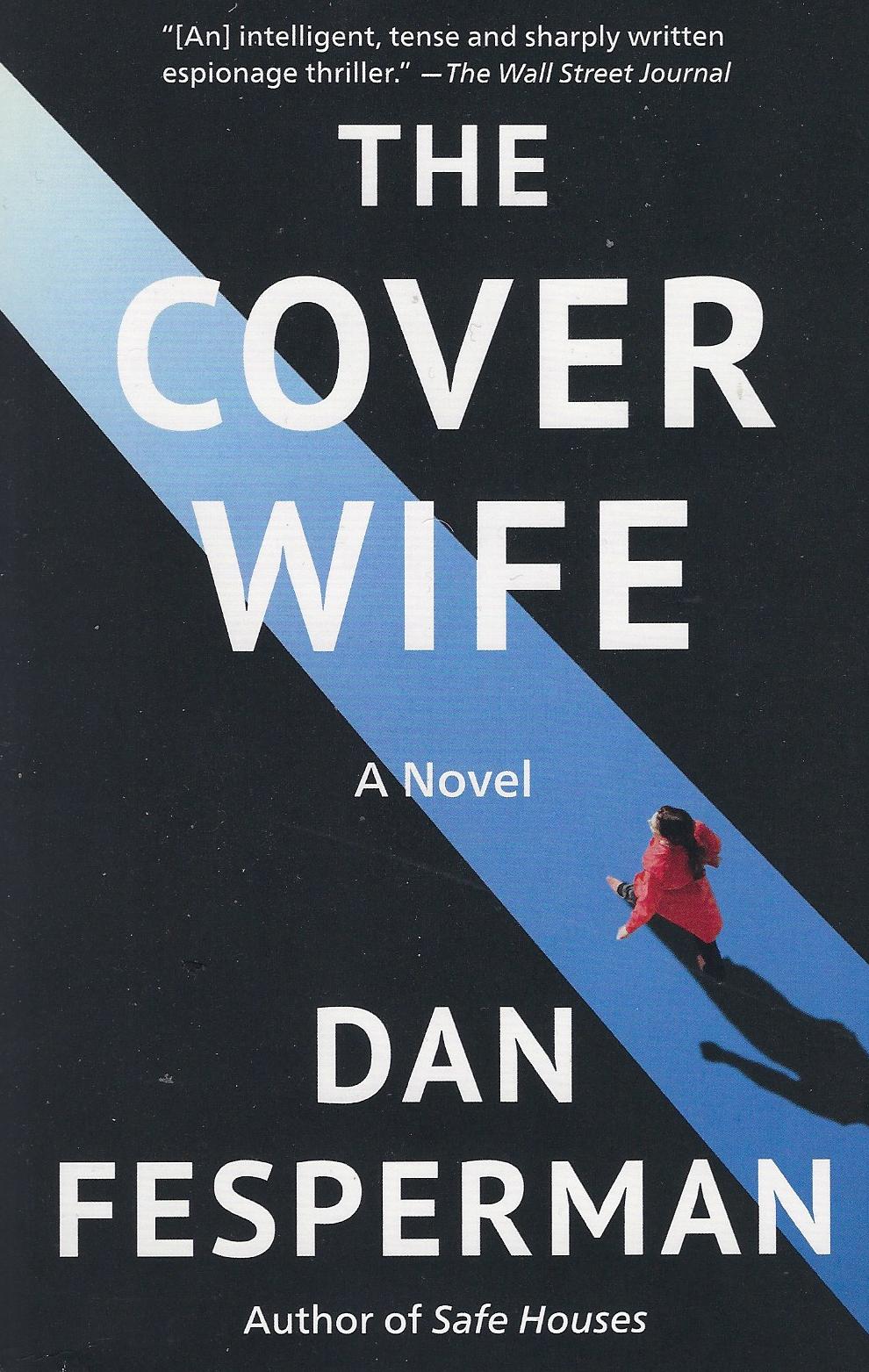
The Cover Wife: Dan Fesperman


This is the second book in an espionage series by Dan Fesperman. The main character in this book is Claire Saylor, a CIA agent stationed in Paris who is sent to Hamburg, Germany to pose as the wife of an academic who has published a controversial book about writings in the Quran. The story is set in Hamburg, Germany and begins in 1999. Claire is in her early forties.

The story is told from the perspective of three people:  Claire; Mahmoud, a young man with an American mother and a Moroccan father who wants to be accepted into an Al Qaeda cell in Hamburg; and Ken Donlan, an FBI agent who liaises with the CIA and has been sent to surveil specific members of the cell. 


What I liked:

  • The characters are drawn very well, especially the main characters. And they are all likable; I cared about them. That helps a lot when reading a book. 
  • I like stories told from multiple perspectives and that works especially well here. More knowledge is shared earlier in the book, yet the suspense is maintained.
  • The spy fiction writers I prefer place the emphasis on characters and how the work affects them, over action, violence, and chase scenes. Dan Fesperman's stories have a slow build up to the final events. There is tension, but the story doesn't bounce all over the place. 
  • The Claire Saylor series features strong female characters -- agents who are capable and want to do more but often get sidelined because of their sex. The first book in the series, Safe Houses, featured a different female agent stationed in West Berlin, Germany, in her early twenties, whose main assignment is overseeing the safehouses in the city. She accidentally overhears a dangerous conversation which leads to her death many years later. In that book Claire Saylor, also early in her career with the CIA,  doesn't show up until the last third of the book, but she has an important role, and the two agents form a lifetime bond.


Spy fiction is one of my favorite subgenres and this was a very engrossing read. I will definitely be reading the third book in the series, which returns to an earlier time in Claire's career.


 -----------------------------

Publisher:  Vintage Crime / Black Lizard, 2022 (orig. pub. 2021)
Length:   321 pages
Format:   Trade paperback
Series:    Claire Saylor, #2
Setting:   Germany
Genre:    Spy fiction
Source:   I purchased my copy in 2022.


Thursday, February 20, 2020

Mr. Calder and Mr. Behrens -- Short Stories

This February I have been reading short stories for Short Story February, as suggested by Rick Robinson at Tip the Wink. I did this once before, and I hope to continue doing it every February. This is the first set of stories I am reporting on. I have also been reading from two other collections, which I will post on next week.

Mr. Calder and Mr. Behrens are spies, working for a secret government group in the UK called the Joint Services Standing Intelligence Committee (JSSIC). They are in their fifties and live in a fictional village in Kent. Mr. Behrens lives with his aunt and tends bees. Mr. Calder lives nearby, alone, and has a Persian deerhound named Rasselas. They are called upon when needed to handle special projects and missions. This book is comprised of twelve short stories featuring these characters.

Each story averages about 20 pages in length and follows an incident that one or both of the agents have been asked to address. They don't always work together and the cases are quite varied. Rasselas is often quite useful. Calder and Behrens carry out their tasks with ruthlessness when necessary.

The stories featuring Calder and Behrens were written from 1962 to 1982. Eleven short stories were published in Game Without Rules in 1968, and those stories were first published in Argosy.

The Spy Guys and Gals site has a good summary of the publication history of the Calder and Behrens stories. There is also more detail on that page about the order of publication. The stories in the books are not in the order published.
       The terrific pair of Daniel Calder and Samuel Behrens first appeared to readers in the pages of the U.K. magazine Argosy in early 1962 and would continue to show up there off and on for just over a decade with the last one appearing in 1973. While many of these adventures would get turned into teleplays for BBC Radio, two of the last three from the Argosy period were either up-to-then unpublished stories turned into teleplays or novelizations of the episodes.
       Just over half a decade would go by before they would again show up in print, this time in the U.S. magazine Ellery Queen Mystery Magazine. Again there were a couple that had been aired on radio before being shown in print.
It has been almost exactly three years ago I purchased my copy of Mr. Calder and Mr. Behrens and read the first three short stories in the book, after having read all of the stories in Game Without Rules. It took until this February for me to finish up all the stories in the book. I don't know why it took me so long. I love all the stories. However, they are not light reading. They are packed with details and nuances, most of which I am sure I miss. I like the two agents and their matter of fact approach to their work, and other characters in the stories are also interesting, although usually not so well fleshed out.

See also:

Post on Mr. Calder and Mr. Behrens at Tip the Wink.

Post on Game Without Rules at Existential Ennui.


 -----------------------------

Publisher:   House of Stratus, 2011 (orig. pub. 1982)
Length:      245 pages
Format:      Trade paperback
Setting:      UK, mostly; also in Germany.
Genre:        Espionage, short stories
Source:      On my TBR pile for three years.


Wednesday, February 28, 2018

The Quiller Memorandum: Adam Hall

Quiller is a British secret agent for a covert organization of spies, unacknowledged by the government. He is very unusual (for a hero of spy fiction) in that he doesn't smoke, drink, or carry a gun. At the point that the book begins (in the 1960s), he is in Berlin and has finished a long string of assignments to find Nazi war criminals and bring them to trial. He is planning to return to England the next day, but is enticed into a new assignment when another agent is killed.

This novel is also unusual in that the plot is taut, a straightforward telling of Quiller's relentless search for Heinrich Zossen, a Nazi war criminal who Quiller detests. It does have a good bit of action with  tense moments of suspense but still a cold, often matter-of-fact story.

All of these descriptions are negatives, yet I liked the book quite a bit, and I like the character. Maybe because he is so believable. Spying is not romanticized. The first person narration pulled me in immediately.

For me this book doesn't rank up there with those of Deighton, le Carré, or McCarry but then I have only read one book in the series, so maybe I will be won over in future books. The style is unique. There are another 18 books in the series, written over 30 years, and I will definitely be reading more of them.


This book was originally published in 1965 under the title The Berlin Memorandum. Adam Hall is a pseudonym for Elleston Trevor, and you can learn more about him at The Unofficial Quiller Web Site.

There is a film adaptation, starring George Segal, Alec Guinness, Max Von Sydow, and Senta Berger. I did not find that the film measured up to the book. It was a very loose adaptation, and I thought the story was confusing. It did move pretty fast but it seemed to be more of an art piece than an action film. However, there are many fans of the movie and I would love to hear other opinions. I will probably be watching it again. The director was Michael Anderson and the screenwriter was Harold Pinter.


See these sources for more detail and other opinions:


 -----------------------------

Publisher:   Tom Doherty Associates, 2004 (orig. pub. 1965)
Length:      220 pages
Format:      Trade Paperback
Series:       Quiller #1
Setting:      Berlin
Genre:       Espionage 
Source:      From my TBR piles; purchased in 2014.

Wednesday, November 23, 2016

The Labyrinth Makers: Anthony Price

David Audley is an unlikely spy. True, he works for England's Ministry of Defence, but strictly as a back-room man, doing meticulous research on the Middle East. This new assignment, then, comes as something of a surprise: A WWII-era British cargo plane has been discovered at the bottom of a drained lake, complete with the dead pilot and not much else. Why are the Soviets so interested in the empty plane and its pilot--interested enough to attend the much-belated funeral? And why has Audley been tapped to lead the investigation? 
As Audley chips away at the first question, he can't stop asking the second. Could he possibly have been given the assignment in order to fail, to preserve the decades-old secrets at the bottom of the lake? If that's the case, someone's made an error. Audley's a scholar by training, temperamentally allergic to loose ends. And the story he unravels is going to make some people very uncomfortable indeed.
This introduction to the story is taken from the back of my Felony & Mayhem edition.

I first read about Anthony Price and his series of esponage novels featuring Dr. David Audley at Nick Jones' blog, Existential Ennui. I was hooked in by his review of War Game, book 7 in the series. Now that I finally got around to reading this first book in the series, I am forever grateful. This is just the type of spy fiction I like: a quiet book, a lot of talking and thinking and not a lot of action.

The characterizations are very good. Audley and the daughter of the dead pilot are the best characters in this book, but there are secondary characters here that will be featured in later books. I liked the author's writing style. I started re-reading portions for this review, and I noticed lovely descriptions of the area (the South Downs) that I had missed in my first read through. And on top of that, each book may center around another person that Audley works with. Although Audley is always involved to some extent, this should indicate that there will be variety in the series.

The only negative is that I want to read the rest of the books and there are eighteen more. I have now ordered the second book in the series, The Alamut Ambush.

In Encyclopedia Mysteriosa, William L. DeAndra notes that a characteristic of each novel in this series is that it hinges on some piece of history.
Anthony Price writes spy novels as no one ever has. The interwoven adventures of Dr. David Audley of British Intelligence and his associates combine haunting characterization, complex plots, history, international intrigue and pure detection to an extent rare in the genre.
Jo Walton also wrote an article at Tor.com on the aspects of history in this series, titled History Informs the Present: Anthony Price’s Audley series. So if you like learning about history, this is a good series to try. Walton's article also points out four novels in the series that could be good starting points.

Other resources...


-----------------------------

Publisher:   Felony & Mayhem, 2005 (orig. pub. 1970)
Length:      287 pages
Format:      Trade paperback
Series:       David Audley #1
Setting:      UK
Genre:        Espionage fiction
Source:      I purchased my copy.