Showing posts with label Stuart M. Kaminsky. Show all posts

Wednesday, September 2, 2026

Books Read in June and July 2026


I read a lot of good books in June and July. For various reasons I only read 3 books in June, and I was grateful that I was able to finish 6 books in July.  Since we are now in September, I can report that I did not even come close to finishing my list of books for the 20 Books of Summer event. In June, July, and August I read a total of 14 books. Two were not on my 20 Books list. So I am continuing to read books from that list through September and October, interspersed with other books.


Here are the nine books I read in June and July...

Fiction

Lillian Boxfish Takes a Walk (2017) by Kathleen Rooney

Lillian Boxfish is 85 years old and decides to take a long walk in New York City on New Year's Eve, 1984. That is very impressive to me, but for her it was easy because she always walks a lot. She meets a lot of different people along the way. The story of her life is told as she takes the walk, mostly through her thoughts. She loved her work in advertising and she was very successful, but there were some very sad stories about her life. Lillian reminded me of the protagonist of The Correspondent. She is outspoken, doesn't mince words, and is opinionated. But still a very likable protagonist. I liked that she did not conform to accepted norms and behaviors. Lillian is based on a real woman, poet and ad woman Margaret Fishback. I bought this book at the September book sale last year and I am so glad I did. 


Welcome to the Hyunam-Dong Bookshop (2024) by Hwang Bo-Reum, Translated by Shanna Tan

This was another great read. It is about a South Korean woman who left her high-stress job and got a divorce and started a book store. One theme is how reading and books help people, but it also has a strong focus on the protagonist's goal to create a good bookshop that people will visit again and again. What I liked best were the philosophical thoughts on what people want out of life. The characters (employees and customers) are all ages and visit the store for many different reasons. My husband read this book and Every Day I Read by the same author, and liked them both. In Korea, this type of book is called "healing fiction." Without a doubt, I will read this book again.


Fiction, Classic

Middlemarch (1872) by George Eliot

I read this book for my 20 Books of Summer list. I had never been interested in reading Middlemarch until recently, but in the spring  of this year I got interested in the book and my husband owned a nice copy. I started reading it on June 4th and finished reading on July 4th, with a 10 day break somewhere in there. It was quite an experience.  My review is here.


Science Fiction

Floating Hotel (2024) by Grace Curtis

This is another science fiction novel my son read first, then loaned to me. I am a sucker for novels set in hotels, so I was eager to read it. It starts out as a simple story about a ship that functions as a luxury hotel, going from planet to planet, with guests and occasionally employees taking time to visit the planet below.  My review is here.


Crime Fiction

Murder on the Yellow Brick Road (1977) by Stuart M. Kaminsky

Stuart M. Kaminsky is one of my favorite authors. His Toby Peters mystery series is set primarily in Hollywood, California. Each book in the 24-book series is centered around a celebrity. Toby is a perpetually down-on-his-luck private eye; the books are humorous and clever. Murder on the Yellow Brick Road is set in 1940, and Judy Garland is one of the primary characters. My review is here.


The Father Hunt (1968) by Rex Stout

Rex Stout is my favorite author. This book is part of his Nero Wolfe series, and one of my favorite books in the series. Amy Denovo asks Archie to find out who her father was. Her mother had been killed a few months earlier in a hit and run incident. I liked Amy because she is a strong young working woman who knows what she wants. She is living with Lily Rowan because she is working on a book about Lily's father. I always like the books that feature Lily, a very good friend of Archie's. I read this book when I was on jury duty for two days in June. It was the only book on this post that was not on my 20 Books of Summer list.


A Graveyard for Lunatics (1990) by Ray Bradbury

This is the 2nd in a three-book mystery series. The first book, Death is a Lonely Business, is a homage to mystery writers such as Raymond Chandler, Dashiell Hammett, and Ross Macdonald. A Graveyard for Lunatics seems to be based on Bradbury's experiences in Hollywood in the 1950s and 60s. Both books include bizarre happenings and strange, eccentric characters. The story in this book is so fantastical that it is hard to take seriously as a mystery. Yet, in the end I enjoyed the story and was very glad I read it. The magic of Ray Bradbury's writing turns it into a lovely story.  My review is here.


Glass Houses (2017) by Louise Penny

This is the 13th book in the Inspector Armand Gamache series. I have been really impressed by the last four books I read in the series, and this was no exception. I always feel like Penny's Inspector Gamache novels are too dark and serious while I am reading them, but at the end I always give them 5 stars. This one had a very complex plot. The story starts out with Inspector Armand Gamache on the witness stand testifying at a trial, and after that it goes back and forth between the trial and the events that preceded it. Sometimes that gets confusing, but it also created a lot of suspense.


The Sisters (1985) by Robert Littell

This is a weird and wacky story of two KGB agents from the USSR. One of the agents is a sleeper agent in the US. The "Sisters" of the title are two male CIA agents; they are partners and have planned an illegal scheme which is not revealed until the very end. The whole thing is very complex, but the joy is in the journey of reading it, and it is very humorous. It has been a long time since I had so much fun reading a spy story. 


About the photos:

At the top of the post is our cat London, who has been living with us over a year now. He has changed a lot from the cat who first came to live with us. Glen likes to say that London has flipped the maturity switch, although he sometimes switches back to an earlier version. And he has gained 2 pounds; he is now at 14 pounds.

The two photos below are of plants on our front walkway, which were planted in March of this year. The top photo is a cuphea, in a pot. They attract hummingbirds, and we have at least four pots of those in the front. The bottom photo shows a geranium (or pelargonium), which we were lucky to find with that coloration. All of the photos were taken by Glen. Click on the images for the best viewing quality. 


Saturday, July 25, 2026

Murder on the Yellow Brick Road: Stuart M. Kaminsky


The Toby Peters mystery series is set primarily in Hollywood, California. Each book in the series is centered around a celebrity. Toby is a perpetually down-on-his-luck private eye; the books are humorous and clever. There are 24 books in the series.

Murder on the Yellow Brick Road is set in 1940, and Judy Garland is one of the primary characters. Toby gets a call from Warren Hoff at M.G.M., who requests that he look into the death of a little person dressed up as a Munchkin. The body was found on an old set of The Wizard of Oz, which had come out the previous year. Toby soon meets Judy Garland, who had heard his name at a party recently and wants him to work on the case. In addition to the humor and the intricate mystery plot, this book also features cameos of Clark Gable and Raymond Chandler.


About the author:

Stuart M. Kaminsky (September 29, 1934 – October 9, 2009) was an American mystery writer and film professor. He is best known for the Toby Peters mysteries and the Inspector Rostnikov series set in Russia, consisting of 16 books. He received the 1989 Edgar Award for Best Novel for A Cold Red Sunrise, a novel in the Inspector Rostnikov series. He was a past president of the Mystery Writers of America and in 2006 received the Grand Master Award from that organization. 

Kaminsky also published two shorter series. The Abe Lieberman series of ten books is set in Chicago; Lieberman is a sixty-year-old Chicago police detective. The Lew Fonesca series is set in Sarasota, Florida. Fonesca is a process server who ends up investigating crimes. There are 6 books in the series.

I am a big fan of Kaminsky's mysteries. I have read all but the last book in the Inspector Rostnikov series. I would like to read all of the Toby Peters books, but I have to find out how many books I already own. I have read the first book in both of the other two series and I thought they were excellent. The series are all different. 


Sunday, June 28, 2026

Books Read in May 2026


I read nine books in May, more than I expected to, but it is a good thing, because with only 3 days left in June, I have only read three books. Plus I thought all of the books read in May were very good reads.


Graphic novel, Nonfiction

My Cat is Such a Weirdo, Vol. 1 (2023) by Tamako Tamagoyama (Writer and Artist)

This is the first in a manga series about cats. In this case the stories are true, based on the author's blog, and the emphasis on the weird behavior of the author's cats. We thought our latest cat was pretty crazy, in comparison to previous cats we had owned, but really some of his weirdness could be due to his age, about 4 years old, acting much like a teenager. One chapter in the manga was about the cats her parents had, and that one was especially good.


Fiction

Dept. of Speculation (2014) by Jenny Offill

This is the story of a marriage in vignettes. It is novella length, in 46 short chapters. The man and woman are not young when they marry and they suffer through some trials and tribulations. They have a child; the wife is not prepared for how much she loves their daughter. The wife tells the story, and when she talks about herself, she calls herself "the wife." The descriptions of her daughter as she grows up are lovely. I had some problems with the style; too fragmented I think. But I look back and think about how much it affected me, and that I liked it very much.


Nosy Neighbors (2024) by Freya Sampson

This was the first book I read in May, and I could not remember why I had purchased it. I like books with elderly protagonists and it is a mystery of sorts. In the end, I liked it very much, so it is good that I did read it. Nine residents live in a beautiful old Victorian apartment building that has not been kept up. There are young tenants, elderly tenants, and others in between. They soon learn that they will be evicted and their home will be torn down. Many of the tenants do not get along, but when faced with eviction they band together to fight against it. That is a very pared down version of the story and there is much more depth to it. 


Science Fiction

The City in the Middle of the Night (2019) by Charlie Jane Anders

The focus of this book was climate fiction; the setting is a colonized planet, where half of the planet is perpetually cold and in the dark, and the other half is always in the light and hot. It wasn't perfect but I found a lot to like. My review is here.


Crime Fiction

The Ivy Tree (1961) by Mary Stewart

Mary Stewart was an author well-known for her romantic mystery novels and her Merlin series. The Ivy Tree is an impersonation novel, and doesn't have much romance in it. A beautiful young woman who is visiting England from Canada is convinced by a man she meets while traveling to pose as a missing heiress in a scheme to get the inheritance. I liked it very much. See my review here.


Three for the Chair (1957) by Rex Stout

This is one of the Nero Wolfe books that consists of three novellas. Back in 2025, I read and reviewed "Immune to Murder," the second story in this book. In May of this year, I read and reviewed the other two novellas in Three for the Chair. They were all excellent stories.


An Ordinary Decent Criminal (2005) by Michael Van Rooy

I will say first that I enjoyed reading this book and could hardly put it down. But, in some ways it was the most shocking, violent mystery I have read in a long time. The protagonist is an ex-con who has turned his life around and has a wife and a young son. But many people will not give him a chance to prove that he has changed. The first two chapters were so violent I nearly quit reading it. I am glad I stuck it out to the end. Bill Selnes at Mysteries and More from Saskatchewan wrote a very good review of this book.


People Who Walk in Darkness (2008) by Stuart Kaminsky

This was the 15th book in the Inspector Porfiry Rostnikov mystery series and every bit as good as all the prior ones in the series. Rostnikov is the head of a team of investigators in the Office of Special Investigations in Moscow. His boss is Igor Yakovev, formerly of the KGB. In this book the Inspector is sent to Siberia to investigate the death of a Canadian man, who was killed while inspecting a diamond mine. Others on his team are sent to Kiev related to the same case. It was wonderful to get back to all the characters I had loved in previous books in the series. Sadly, the next book in the series was the last book, and after that one, I will have no more of them to read. On the other hand, Kaminsky wrote three other series and I can read more books in those series.


The Man Who Died Seven Times (1998) by Yasuhiko Nishizawa

This is a cross-genre novel. I see it primarily as in the mystery genre because the main theme is solving a murder, but the protagonist is stuck in a time loop so that firmly places it in the time travel genre. There are many versions of time loop novels, and this one is different than any of the ones I have read. It is far from perfect, but I liked it so well that I would read others by him if they were translated to English.


About The Photos

At the top of the post is our wonderful cat, London. The photo was taken at the end of May; London had been with us about ten months then and he is close to four years old. His personality is very different from either of our two previous cats and he is huge; I can barely pick him up.

The other two photos were taken at the Rose Garden across from the Santa Barbara Mission. One was taken in June 2020 when most places were still closed down due to Covid. The other was taken in June 2021 when places were beginning to reopen after Covid. Click on the images for the best viewing quality.


Saturday, March 7, 2026

Six Degrees of Separation: from Wuthering Heights to Dancing in the Dark


The Six Degrees of Separation meme is hosted by Kate at booksaremyfavoriteandbest. The idea behind the meme is to start with a book and use common points between two books to end up with links to six books, forming a chain. The common points may be obvious, like a word in the title or a shared theme, or more personal. Every month Kate provides the title of a book as the starting point.

The starting book this month is Wuthering Heights by Charlotte Brontë. I don't remember ever reading that book, but recently when I read some reviews, it was described as being about obsession and revenge.


1st degree:

I searched on my blog for a book that combined obsession and revenge and the only one that came up was The Beast Must Die by Nicholas Blake. This book, a part of the Nigel Strangeways series, is widely acknowledged to be a crime classic. But I resisted reading it for years.

The story begins with these lines from Frank Cairnes' journal, in which he plans the death of the person who killed his son. 

"I am going to kill a man. I don’t know his name, I don’t know where he lives, I have no idea what he looks like. But I am going to find him and kill him…"

2nd degree:

I purchased my copy of The Beast Must Die at the Annual Book Sale in September 2019. The same year, I purchased four old paperback editions of books by Mary Stewart at that same book sale. One of them was The Ivy Tree, published in 1961. It is about a young woman, Mary Grey, who has a strong resemblance to the heiress to a fortune, who disappeared years before. She is persuaded to impersonate the heiress in a scheme to get the inheritance.  


3rd degree:

Josephine Tey's Brat Farrar is another impersonation novel, published in 1949. I read that novel but it has been so long that I want to read it again. From what I have read, Brat Farrar was an inspiration for Mary Stewart's book. I have read all of Josephine Tey's mystery novels. She wrote six Inspector Grant novels and two standalone mysteries.


4th degree:

Josephine Tey is the sleuth in a historical crime fiction series by Nicola Upson. I have read the first book in that series, An Expert in Murder. I don't always enjoy mysteries where the sleuth is a real person, and I had reservations about how much the sleuth in this book resembles the real Josephine Tey (whose real name was Elizabeth Mackintosh), but I did find the story compelling and enjoyed the setting, so I had planned to read more of this series. I have four more books from this series on my shelves so I should follow up on that.


5th degree:

Another mystery novel with a real-life author as the sleuth is Jane and the Man of Cloth. In this case the sleuth is Jane Austen. This 2nd book in the series was published in 1997 (and I read my copy in 2004). The 15th and final book in the series was published in 2023. I have only read the first two books but I have read many good things about the series and the way that Jane Austen is handled as a main character, so I may return.


6th degree:

My final book for this Six Degrees is from a historical mystery series that features real-life people as characters, but not as the sleuth. Toby Peters is a private investigator who is often asked to help movie stars of the 1940s with their problems. The first book in the series, Bullet for a Star, features Errol Flynn, Humphrey Bogart, and Peter Lorre. In Dancing in the Dark, the 19th book in the series, Fred Astaire is being harassed by a gangster and his girlfriend. The series is written by one of my favorite authors, Stuart Kaminsky. 


And that concludes my Six Degrees. All my books were mysteries. All of them were either vintage mysteries or historical mysteries. And all of the books were set in the UK except for the very last one. I prefer more variety in my Six Degrees chains, either in genre or setting or both, but these are all good books, so I am happy with the chain.

If you did this month's Six Degrees, where did your list take you? Have you read any of these books? 


The next Six Degrees will be on April 4, 2026 and the starting book will be  Virginia Evan's epistolary novel, The Correspondent.


Thursday, August 11, 2022

Books Read in July 2022


I read thirteen books in July, many more than any other month this year. Some of them were short books. Also, a couple of books I had read parts of earlier in the year. But there were some longer books too.  So I was surprised by how many books I read.


Nonfiction

My Bookstore: Writers Celebrate Their Favorite Places to Browse, Read, and Shop (2012) by Ronald Rice (Editor), Leif Parsons (Illustrator)

In this book about independent bookstores throughout the US, 84 authors have written essays about one bookstore that has been special for them. In some cases the reader learns more about the author also. Some were more interesting than others but any reader (at least in the US) would have some favorites. 


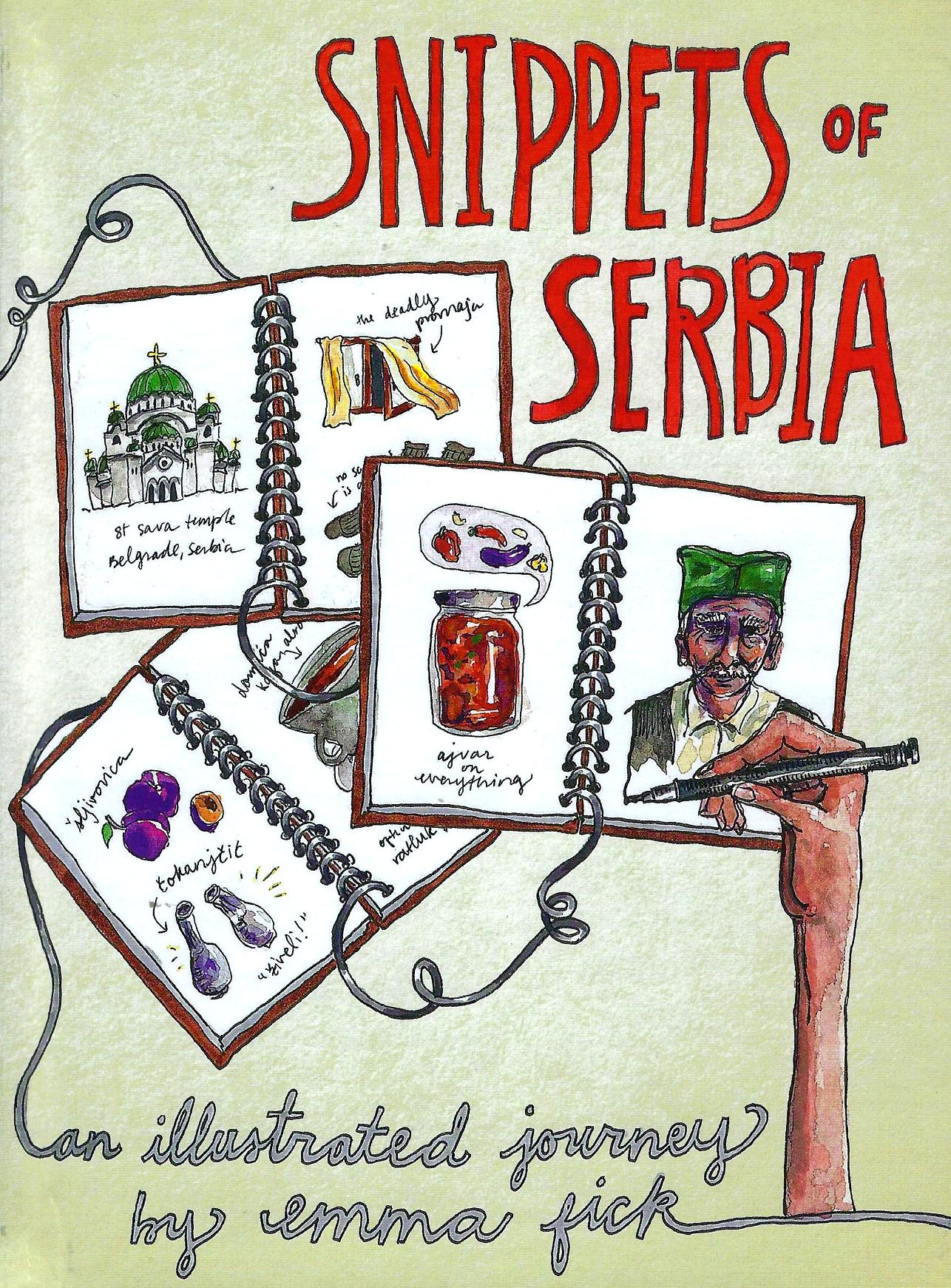
Snippets of Serbia (2015) by Emma Fick 

At Goodreads: "This is Emma Fick's illustrated journey through the weird, the fun and the unique adventures to be experienced across this small Balkan country." Her illustrations are lovely and personal. Some pages have a good bit of text, others just have titles, so it is a very quick read. She records various memories and experiences that she had on two visits to Serbia. Lots of pictures of food. 


General Fiction 

The Bookshop (1978) by Penelope Fitzgerald 

Having never read anything by this author, I had no idea what to expect from this book. The cover led me to think this was a light-hearted book about a bookshop, and it wasn't that at all. I did give it a high rating, because I liked the writing and I think the author was expressing exactly what she wanted to, and did it well, but in the end it was too depressing for me. I do want to read more by this author.


How the Penguins Saved Veronica (2020) by Hazel Prior 

The original title of this book was Away with the Penguins. I learned about this book from a booktube reviewer, Bookworm Adventure Girl, and I learned about the booktuber from Cath at Read-Warbler (see her review). The two main characters are a curmudgeonly old woman (Veronica, 86 years old) and her grandson Patrick, who she found only late in life. Veronica and Patrick both have poor social skills (that is putting it mildly), and they don't get along initially. Veronica takes a trip to Antarctica to spend time at a research station for penguins. I loved the book, every bit of it. 


Fiction / Classic

The Great Gatsby (1925) by F. Scott Fitzgerald

This was the book I read for the latest Classic Club Spin. The story is told beautifully, and the buildup to the conclusion is done well, but I was disappointed in the book. My review here.


Historical Fiction

The English Wife (2020) by Adrienne Chinn

This was the second book I read for the Canadian Reading Challenge. The story covers three time periods: during World War II, in the UK and in Newfoundland; 2001, at the time of the 9/11 terrorist attacks, when many planes coming into New York were rerouted to Newfoundland; and ten years later in the town of Tippy's Tickle, Newfoundland. It was a very good read and I liked the ending. This book was recommended by Constance at Staircase Wit (review here), and she generously sent me her copy to read.


Crime Fiction

Murder on the Trans-Siberian Express (2001) by Stuart Kaminsky

This book is part of a series by Stuart M. Kaminsky, set in Russia under Communist rule (to begin with) and later in Russia, following the breakup of the USSR. I started reading the series in 2005 and now only have two books left to read. My review here.


In the Market for Murder (2015) by T. E. Kinsey

The premise of this series of mysteries, set in the early 1900's, is that Lady Hardcastle and her maid solve mysteries while living in the English countryside. The key is that the lady and her maid are more friends than employer and employee. I was ready for a cheerful, upbeat read and this was perfect. This is the second book in the series, and I am now reading the third, Death Around the Bend.


Box 88 (2020) by Charles Cumming

Charles Cumming is my latest favorite spy fiction author. (I have a lot of them.) Box 88 is a new series featuring Lachlan Kite, an agent for a covert spy agency. Kite is abducted, possibly by terrorists, after leaving the funeral of an old friend from boarding school. It turns out that the abduction is related to an event in the late 1980s when Lachlan was just out of boarding school, visiting his friend in France. At that time Lachlan began spying for the Box 88 group, and there are flashbacks to his introduction to the craft of spying. I loved this book.


Dead in the Water (1983) by Ted Wood

This was the second book I read for the Canadian Reading Challenge. My review here.


An Elderly Lady Must not be Crossed (2020) by Helene Tursten 

This is a book of five short stories and one novella by the author of the Inspector Irene Huss series. Helene Tursten is Swedish, and the stories were translated by Marlaine Delargy. I reviewed the first five stories here and the novella, "An Elderly Lady Takes a Trip to Africa", here.


Vengeance
(1999) by Stuart Kaminsky

Stuart Kaminsky is one of my favorite authors, due to his Inspector Rostnikov series set in Russia (see above). I had never tried his Lew Fonesca series set in Sarasota, Florida. Fonesca is not legally a private detective; he works as a process server. But in this book he takes on two cases: a runaway teenage daughter and a missing wife. I loved the book, and it is a plus that the writing style is entirely different from the Inspector Rostnikov series. There are five more in the series and I will be getting to the next one soon.


The Man from Berlin
(2013) Luke McCallin

A historical mystery, set during World War II, in Sarajevo, Yugoslavia. The protagonist is Gregor Reinhardt, a German officer in counter-intelligence, stationed in Sarajevo during German occupation. Sarajevo is now the capital of Bosnia and Herzegovina, which shares a border with Serbia. Serbians are mentioned a lot in the book, so it was interesting to be reading it at the same time as Snippets of Serbia.


Currently reading

Death Around the Bend by T.E. Kinsey

Fifth Business by Robertson Davies

The Adventures of Sherlock Holmes by Arthur Conan Doyle


The photos at the top and bottom of this post are of Tibouchina heteromalla (Silver leafed Princess Flower) plants in our front flower beds. We have lovely flowers and foliage on these two plants this year. Photos taken and processed by my husband. Click on the images for the best viewing quality.


Monday, July 11, 2022

Murder on the Trans-Siberian Express: Stuart M. Kaminsky


Murder on the Trans-Siberian Express is a fictional ride on the Trans-Siberian Express. It is part of a series by Stuart M. Kaminsky, set in Russia under Communist rule (to begin with) and later in Russia, following the breakup of the USSR. The books were written between 1981 and 2009. 

This is the 14th book in the series and the series protagonist, Chief Inspector Porfiry Rostnikov, works in the Office of Special Investigation, reporting to its director, Igor Yaklovev, the Yak. He has a group of detectives who work under him; they usually work on multiple cases in each book. In this one, the Yak sends Rostnikov to recover a valuable historic document that is in transit on the Trans-Siberian Express. He does not share with Rostnikov what is in the package. Rostnikov has to identify the person who will pay for the package, and intercept both the package and the payment when the exchange takes place.

In one of the secondary cases, the kidnapping of a heavy metal rocker is investigated, and given a high priority because the victim's father is an important figure in the government. The other subplot focuses on attacks on men at various subway stations while people wait for their trains. 


This series is intriguing because of the picture of life in Russia during this interesting period. There were books written before and after the break up of the Soviet Union, and the series reflects the changes in Russia over those years, including specifically how this police team is affected.

The mystery plots are well done, although I personally get more involved in the people and how they deal with the problems in their lives (whether they are related to the crime or personal) than the crimes and solutions. The characterization is excellent.

Rostnikov's strongest characteristic is his support of his staff in the face of the continuing changes in Russia and his ability to get the best out of them. He recognizes their differences and their gifts.


One thing I really liked about this specific entry in the series is the way that the prologue and the epilogue tie together. So often prologues to mystery books appear to me to be useless, not informative. And I learned a lot about the building of the Trans-Siberian railroad while reading this book.


This series is best read in order; the characters grow and their lives change from book to book. However, I think this book can work as a standalone because background on the continuing characters is provided in a way that doesn't interfere with the flow of the story.


 -----------------------------

Publisher:   Mysterious Press, 2001
Length:       277 pages
Format:       Hardcover
Series:        Porfiry Rostnikov, #14
Setting:       Russia
Genre:        Police Procedural
Source:       On my TBR pile since 2007.


Wednesday, November 11, 2020

Nonfiction November 2020: Book Pairings

This is the second week of Nonfiction November, an event that celebrates reading nonfiction. The subject this week is book pairings, specifically pairing a nonfiction book with a fiction book, and this topic is hosted by Julz of Julz Reads.


My first fiction / nonfiction pairing is:


Murder on the Trans-Siberian Express is a fictional ride on the Trans-Siberian Express. It is part of a series by Stuart Kaminsky, set in Russia under Communist rule (to begin with) and later in Russia, following the breakup of the USSR. The books were written between 1981 and 2009. 

This is the 14th book in the series and the series protagonist, Chief Inspector Porfiry Rostnikov, works in the Office of Special Investigation, reporting to its director, Igor Yaklovev, the Yak. He has a group of detectives who work under him, and they usually work on multiple cases in each book. In this one, the Yak sends Rostnikov to recover a treasured historic document on the Trans-Siberian Express.


In The Big Red Train Ride by Eric Newby, the author describes his trip across the USSR on the Trans-Siberian Railway, accompanied by his wife, an official guide, and a photographer. From the book cover: "From Moscow to the Pacific on the Trans-Siberian Railway is the big train ride. It is a journey of nearly 6,000 miles, stretching over seven time zones and consuming nearly eight 24-hour days." This is not considered one of Newby's best travel books, but I think I would enjoy the book just based on the subject matter.

I have not read either of these books yet but I hope that they will be a perfect pairing. However I am open to suggestions for other reads in this area, fiction or nonfiction.


My second pairing is:


Young Bess is the first book in a historical fiction trilogy about Elizabeth I of England, written by Margaret Irwin and first published in 1944.  It covers her life from the time she was 12 until she was about 20, including Henry VIII's death, his son Edward VI's years as king (from age 9 to 15), and Elizabeth's relationships with her brother Edward and Princess Mary, her sister. A large part of the story is about her living with her stepmother Catherine Parr and Tom Seymour, who married Catherine after Henry VIII's death.

The story was beautifully written, vividly describing details of life at that time. I learned a lot, I was entertained, and I enjoyed reading the book. I plan to continue reading the trilogy. The next two books are Elizabeth, Captive Princess and Elizabeth and the Prince of Spain.


Elizabeth: The Struggle for the Throne by David Starkey covers Elizabeth from her early years up through her ascent to the throne and it was described as very readable. 

I picked the book by David Starkey because it sounded good, but if anyone has a suggestion for a better nonfiction book about Elizabeth I, I am interested. I won't be reading any nonfiction in that area until I finish the other two books in the Elizabeth I trilogy by Margaret Irwin.


Thursday, September 3, 2020

What did I read in August 2020?

I read eight books in August. As usual most of them were crime fiction or related books. I did not finish all the books on my 20 Books of Summer list but I did read 12 of them. One was a DNF, and I will read the remaining 7 books in the next two months.


Mystery reference

The Crown Crime Companion  (1995)

Annotated by 0tto Penzler and Compiled by Mickey Friedman

This was a reread. The book lists 101 favorite crime novels as chosen by members of the Mystery Writers Of America. There is some commentary on each book on the list and there are interesting essays on various crime genres. My favorite essays were "The Historical Mystery" by Peter Lovesey and "The Cozy/Traditional Mystery" by Margaret Maron. I also liked the Hardboiled/Private Eye essay by Sue Grafton, titled ""An Eye for an I: Justice, Morality, the Nature of the Hard-Boiled Investigator and All That Existential Stuff."


Historical Fiction

Young Bess (1944) by Margaret Irwin

First book in a trilogy about Queen Elizabeth I. The story was beautifully written, vividly describing details of the life at that time.  My review here.


Science Fiction and Fantasy / Short Stories

Clarkesworld Year Five (2013) edited by Neil Clarke and Sean Wallace

The stories in this collection were published in Clarkesworld Magazine between October 2010 and September 2011. Some are science fiction, some are fantasy and some I wasn't sure about. Almost all of them were good reads. I will be doing a post on this book later. Rick Robinson at Tip the Wink generously sent me this short story collection, plus two others.


Crime Fiction

The Queen's Man: A Medieval Mystery (1996) by Sharon Kay Penman

Justin de Quincy is the illegitimate son of a Bishop, Aubrey de Quincy, and Justin has just discovered this as the book opens. He leaves the Bishop's house but realizes he doesn't have any money. He does have his horse, Copper, and his sword. On the road to London, he surprises two men attacking an older man, a goldsmith from Winchester. The man dies but he lives long enough to ask Justin to deliver a letter to the Queen, Eleanor of Aquitaine. He succeeds at delivering the letter and the Queen asks him to find out who killed the goldsmith and why. This novel, the first of three about Justin de Quincy, is a very nice combination of history and mystery.


Tripwire (1999) by Lee Child
#3 in the Jack Reacher series. I like Jack Reacher and I enjoy the way the author tells a story, but the level of violence in this one was too much for me. My review here.


Shooting at Loons (1994) by Margaret Maron

#3 in the Judge Deborah Knott series. There was a lot to like about this book and I will continue the series. My review here.

Other Paths to Glory (1974) by Anthony Price
This is the fifth book in the Dr David Audley & Colonel Jack Butler series. Audley and Butler are part of an British intelligence group working for the Ministry of Defence. I love this series. Each of the books has some historical theme and this one was connected to World War I and the Battle of the Somme in 1916. This book won the Gold Dagger award of the CWA.

Fall of a Cosmonaut (2000) by Stuart M. Kaminsky
13th book in the Porfiry Rostnikov series. This is another favorite series. Chief Inspector Porfiry Rostnikov of the Moscow police heads a small team of investigators. This time the group has three unusual cases: a missing cosmonaut, the theft of a film, and a death at the Center for Paranormal Research.