Tuesday, May 9, 2023

Short Story Wednesday: Tiny Tales by Alexander McCall Smith


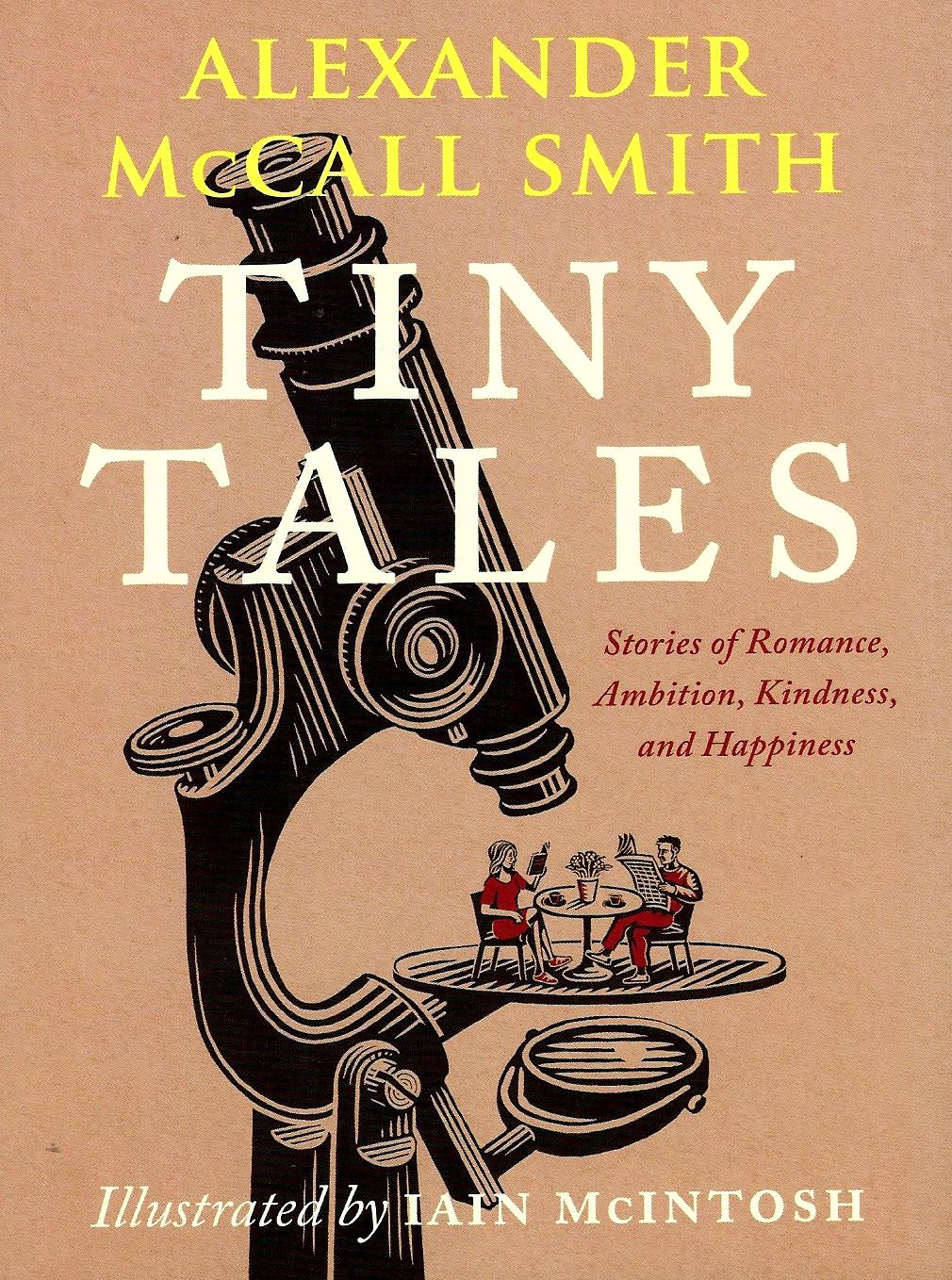
I purchased Tiny Tales at the last Planned Parenthood Book Sale, in September 2022. The subtitle is "Stories of Romance, Ambition, Kindness, and Happiness." Alexander McCall Smith is a well-known author of mysteries, and he has written multiple series. I read the first book in the No. 1 Ladies' Detective Agency Series (twenty years ago) but stopped there. I have never tried any of his other writing, until now.


I was attracted to Tiny Tales because there are illustrations by Iain McIntosh between each set of stories. These are single-page cartoons, with the text written by McCall Smith. The format of the book is small, and the stories appear to all be very short, each under 10 pages.


The first set of stories is titled Tales of Love.

"Descent" 

This is a very short story (three pages), very silly, and also fun. It is about a young woman learning to do a parachute jump.

"Sister Angelica" 

This story about a former nun and missionary is a little longer. Angelica Docherty was recruited to the Order of the Little Helpers at a very young age, while in a Catholic Girls School just outside Austin, Texas. She eventually ends up in Baton Rouge, Louisiana with her friend, Francesca. Angelica is no longer a nun but still doing good deeds.

"By Post" 

A man orders a bride from Thailand but she cannot speak a word of English. It is a sweet story with a lovely ending. 

"Takahashi Ichiro, Passenger-pusher" 

This story is told in first person by Takahashi Ichiro. He began his working life as a passenger-pusher, an oshiya in Japanese. He would push passengers into carriages on a train so that the doors would close efficiently. This is a real occupation, although maybe not as much used today as in the past. This was another light story with a happy ending, but my favorite part was learning about passenger-pushers.


I enjoyed these stories and the illustrated cartoons that followed. I will continue reading the stories and I hope they are all as much fun.


Sunday, May 7, 2023

Books Read in March and April 2023


I skipped a reading summary for March so this is a combo summary for March and April. I read ten books in March and five in September. In April, all the books I read were crime fiction. In March, I read a biography, a graphic novel, two books of general fiction, and a fantasy novel, in addition to crime fiction novels. 


Nonfiction / Biography

The Sisters: The Saga of the Mitford Family (2001) by Mary S. Lovell

After reading The Six by Laura Thompson, I felt like I could benefit from another look at the Mitford family. I hoped for more information about Jessica, Pam and Deborah. And I definitely got that. Also more about their parents, although their brother Tom was only touched on. See my full review here.

Graphic novel

A Man and His Cat, Vol. 3 (2019) by Umi Sakurai (Writer and Artist) 

There are 10 volumes in this Japanese manga series. In the first volume, a widower, Kanda, seeks a cat as a companion, and finds his perfect match at a pet store. The man falls in love with his new cat and names him Fukumaru. The stories in the first and second volume are mostly about Kanda learning to live with and take care of a cat. In the third volume, some earlier relationships in his life are explored. I will be reading more in this charming manga series. See my review of volumes 1-3.


General Fiction

Mrs. Palfrey at the Claremont (1971) by Elizabeth Taylor

Mrs. Palfrey, a widow living on a fixed income, has just moved into an extended residence hotel in London. There are a small number of older residents who are living there permanently. She is proud and trying to fit in, and ashamed that she has no one to visit her.  It explores the time in life when people are alone and moving toward a time when they need more care, so it is not very upbeat but also not a complete downer. It was a very good book and I will be looking for more by this author.

Dear Life: Stories (2012) by Alice Munro

I started reading this book of short storied in November 2022 and finished them in March of this year. There are fourteen stories in the book. Some of them are exceptionally good and I liked the stories overall very much. Alice Munro is a Canadian author and I liked the Canadian setting. I will be reading more of her short stories. See my posts on the first eight stories and the next six stories.


Fantasy

Assassin's Apprentice (1995) by Robin Hobb

I haven't read a lot of fantasy, and certainly not a lot of high fantasy. This first book in the Farseer Trilogy by Robin Hobb has a medieval fantasy setting.  I took  a chance on this one because of Cath's review of The Mad Ship from the Liveship Traders Trilogy by the same author. I loved it and I will be reading more of the trilogy. My review is here.


Crime Fiction

Time to Murder and Create (1976) by Lawrence Block

This is the second book in the Matthew Scudder series. I read the first book in the series back in 2011 and it took me this long to return to it. My goal is to read as many books in the series as I can; there are 17 books. In this novel, Matthew is hired by a criminal to avenge his death. The criminal, who has been supporting himself with blackmail, supplies Matthew with information on his current victims, as he suspects one of them of planning to murder him. I enjoyed this book and read it very quickly, but I suspect that the series get much better as it goes along.


Baby, Would I Lie? (1994) by Donald Westlake

This book is the second book in a two-part series about Sara Joslyn and Jack Ingersoll. Both are journalists, and they are covering the trial of country singer Ray Jones for the rape and murder of Belle Hardwick. See my review here.


The Mask of Memory (1974) by Victor Canning

The Mask of Memory is the third book in the Birdcage series. The series is about a covert security group in the UK, a branch of the Ministry of Defense. In this book, one of the top agents is leading a double life. He is married to a woman who lives in North Devon; she does not know what he does for a living and sees him infrequently. No one in his group knows that he is married, or of the existence of the home in North Devon. I enjoyed the first two books in the series and this one was also very good. I will be moving on to the fourth book in the series, The Doomsday Carrier, soon.


4:50 from Paddington (1957) by Agatha Christie

This is the 7th Jane Marple mystery. Jane Marple's friend Elspeth McGillicuddy sees a man strangling a woman in a passing train. She tells the railway officials and later the police, but no one can find any evidence of a crime, and they don't really believe her. Jane Marple decides to investigate. After finishing almost all the Hercule Poirot novels in 2021, I now want to finish up the Miss Marple series.


Murder in a Nunnery (1940) by Eric Shepherd

The first of two short novels set in Harrington Convent. I read this book for the 1940 Club organized by Simon at Stuck in a Book and Karen at Kaggsy's Bookish Ramblings. My review is here.


Bad Faith (2002) by Aimée and David Thurlo

Bad Faith is the first book in a series about a nun who solves mysteries. The setting is in New Mexico. Sister Agatha is an extern nun who deals with the outside world for her order. I liked the mystery but the really interesting part was reading about the cloistered nuns and their daily life. There are only six in the series and I would definitely read more of them if I have the time.


The So Blue Marble (1940) by Dorothy B. Hughes

This book was Dorothy B. Hughes' debut mystery novel. It is unlike any other book by Hughes that I have read. In a Lonely Place and Ride a Pink Horse are noir novels, with a much more serious tone. This one is also on the noir side but more fantastical, and requires a good bit of suspension of disbelief. See my review here.


The Blind Man of Seville (2003) by Robert Wilson

Although I had decided earlier to stop reading Robert Wilson's novels because most of them had too much graphic violence and sex for me, I took a chance on this book, because it is set in Seville, Spain. This book did have those elements, but I was glad I took a chance on the book. The setting and character development was very good.


The Echoing Strangers (1952) by Gladys Mitchell

This is the 25th novel in Gladys Mitchell's Mrs. Bradley series. There are two plot threads. The first takes place mostly in the village of Wetwode on the River Burwater, where Francis Caux lives with his guardian, Miss Higgs. A murder victim is discovered near to the riverside bungalow that Francis lives in. The second follows a separate murder investigation in the village of Mede, where Derek Caux, Francis's twin, lives with his grandfather, Sir Adrian Caux. I read this book as part of a group read hosted at Jason Half's blog. The first of four posts about the novel is here.


Body Line (2011) by Cynthia Harrod-Eagles

I used to love the Bill Slider mystery series but got side-tracked. In April, I decided to pick it up again with Body Line, the 13th book in the series. I had just finished a very violent and dark police procedural and I wanted to go in the opposite direction. There is a strong focus on the lives of the two major characters (Slider and his partner Atherton) in addition to the investigation of the crime. I will be looking for the next in the series.


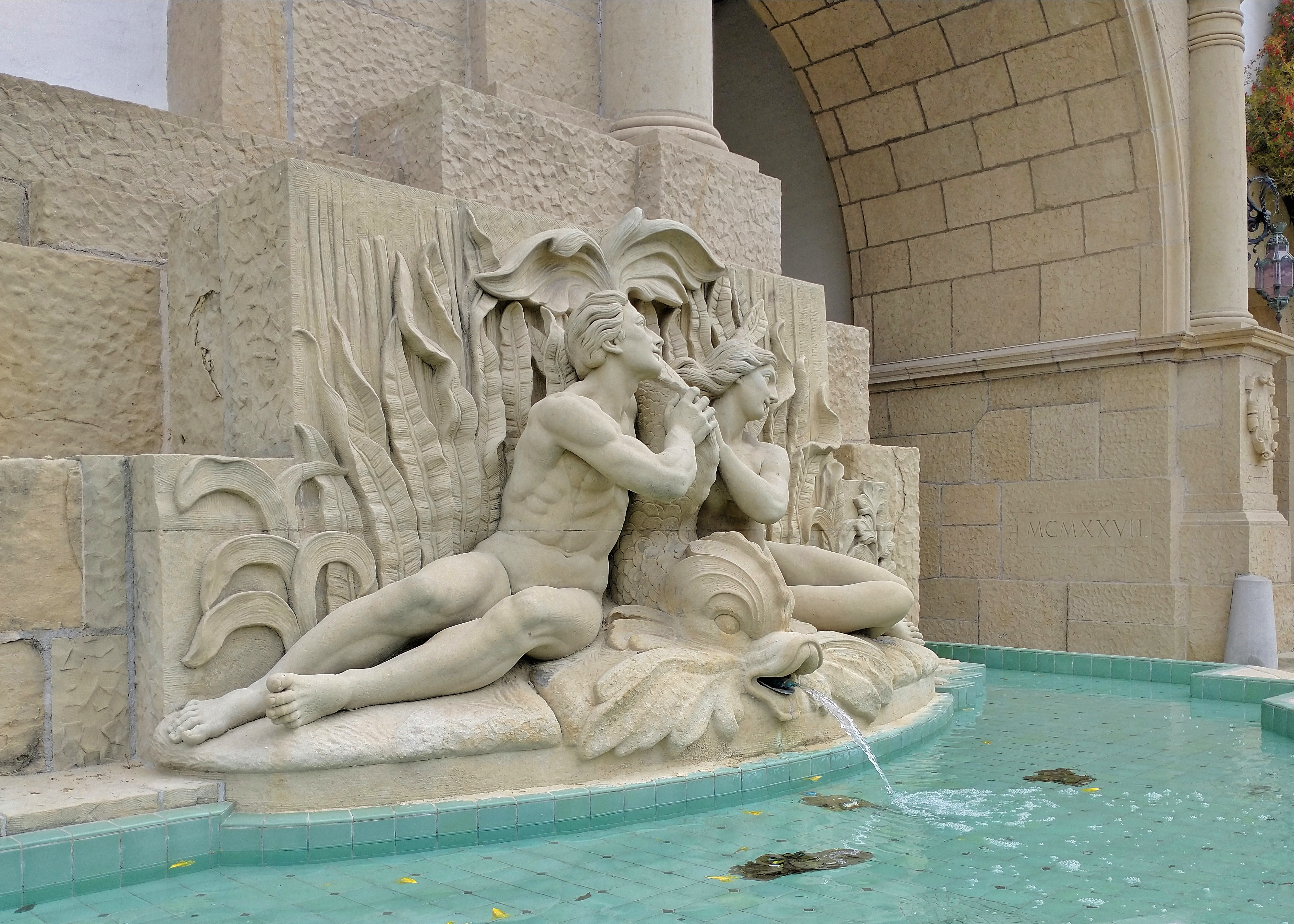
My husband was on jury duty for a few days recently. The images at the top and bottom of the post were taken at the Santa Barbara County Courthouse, while he was there. The courthouse building has lovely grounds and architecture. Click on the images for the best viewing quality.


Friday, May 5, 2023

The In and Out Book Tag

A few weeks ago I saw this Book Tag at Cath's blog, Read-warbler. I enjoyed it so I decided to give it a shot. Also see this book tag at Lark Writes on Books and Life and Fanda Classiclit

Would you be In or Out on these book-related questions?


Reading the Last Page First: OUT

I would never do that. If I open the book even close to the end my eye always finds some spoiler. 

Enemies to Lovers: OUT

Not my favorite plot type, but then I am not a big reader of romances. The end results always seem too obvious to me.

Dream Sequences: OUT

BUT... I don't remember reading any books with one in it. I don't care for them in TV shows or movies.

Love Triangles: OUT

Similar to above. I like a romance within another type of story, like a mystery, science fiction, or fantasy, but not as the main story. 

Cracked Spines: IN

I am not sure how cracked this spine would be. And this is not something I think about that much. I don't mind having used books, I like very old paperbacks, and it is rare if they don't have creases on the spine. Sometimes a (new) book binding is so tight that you can barely read it without cracking the spine a bit.

Back to My Small Town: IN

I like this story line fine in the hands of a good author, but I do think maybe it is overdone a bit now, from the number of new books coming out with this theme. 

No Paragraph Breaks: OUT

No, just no. I might force myself to try a book like that if there was a good reason.

Multi-generational Sagas: IN

But to be honest I don't know that I have ever finished this type of series. I would not reject it though.

Monsters Are Regular People: IN

Another type of story I don't have a lot of experience with but am open to.

Re-Reading: IN

I often reread vintage mysteries and I have reread all of the Nero Wolfe mysteries by Rex Stout multiple times. I have a group of spy fiction authors that I plan to reread someday.

Artificial Intelligence: IN 

I don't know how many books with that element I have read, but I do like the Murderbot Diaries series by Martha Wells, which features an android with Artificial Intelligence.

Drop Caps: IN

This is a decorative element that can look very nice, although I have seen it where the drop cap letter was so large it was confusing. Usually I don't even notice one way or the other.

Happy Endings: IN

I like happy endings. It is especially nice if they are realistic and believable. I know all endings cannot be happy, but downer endings are not my favorite.

Plot Points That Only Converge at the End: IN

I wasn't sure what that meant exactly but I am interpreting it to mean there are multiple plot lines which seem totally unrelated, and then finally in the end the connections are revealed. And I do like that type of story when well done.

Detailed Magic Systems: IN, sort of

I haven't read that many books with this element. And if I had answered this question a month or so ago, I would have said OUT. But the fantasy book I read recently, Assassin's Apprentice by Robin Hobb, used forms of magic, so I guess I am open to just about anything if the writing pulls me in.

Classic Fantasy Races: IN?

Same answer as above. Not usually my cup of tea, but I am sure that the author and the writing makes a difference.

Unreliable Narrators: OUT

Years ago, I read a very good book with this element. But now this element is used too much. And with blurbs and reviews telling you that there is an unreliable narrator, what is the point?

Evil Protagonists:  OUT

I haven't read any books with an evil protagonist although I have a couple that I want to try.

The Chosen One: OUT

Not a favorite trope. But I haven't read that many books with this element so...

When the Protagonist Dies: OUT

I would not reject a book for this reason, but I am never happy with a book with that element.

Really Long Chapters: OUT

I definitely prefer books with short chapters. But I would not reject a book only for that reason.

French Flaps: IN

I like the way they look. See answer below.

Deckled Edges: IN

Don't particularly care one way or the other. I love books with beautiful covers and design, and I have purchased books for the cover art alone, but that would not be my sole basis for purchasing a book. Except that type of a decent size to read is important to me.

Signed Copies by the Author: IN

Doesn't really matter, one way or the other.

Dog-Earing Pages: OUT

I think anyone has the right to do whatever they want to the pages of a book that they own, but I would not do that to a book. Mainly because I often pass them along to a charity book sale, and I want the resale value to be good.

Chapter Titles Instead of Numbers: IN

Nice but not important. Unfortunately, I often ignore the chapter titles when I should have been paying attention to them. I noticed that the book I am reading currently, Slough House by Mick Herron, does not have chapter numbers or titles; the next chapter just starts about 1/3 down the page. Each chapter is divided into small sections, so it isn't a difficult read, but different.


Tuesday, May 2, 2023

Short Story Wednesday – Murder by the Book: Mysteries for Bibliophiles


This week I finished reading Murder by the Book, a short story anthology edited by Martin Edwards. It is a part of the British Library Crime Classics series, published in the US by Poisoned Pen Press. 

In early March, I read and reviewed the first six stories in this book. In that post I listed all the stories and authors.

I liked most of the remaining 11 stories in the book. The introductions that precede each story were excellent, providing some titles the author has written and other interesting facts related to the story or the author.


I have two favorites in the most recent batch of stories I read. Both of them would be easy to spoil so I am keeping the description of each brief.

"A Question of Character" by Victor Canning

(published in 1960)

Victor Canning is one of my favorite authors. He wrote a lot of books, some general fiction, some children's fiction and some spy fiction. I have stuck with the spy fiction so far, but I want to try some of his general fiction too. 

In Canning's story, a man and his wife are both authors. The husband wants a divorce, but he decides to kill his wife instead because she has become a more successful writer than he is.


"A Book of Honour" by John Creasey

(published in 1965)

John Creasey has written even more books than Victor Canning and written under many pseudonyms. I read some of his fiction when I was much younger and enjoyed it, but haven't read any recently. 

"A Book of Honour" is the story of an English bookseller in India who becomes friends with an Indian man who sells books on a much smaller scale. There is no murder, but a serious crime is involved, and the story is more about the friendship of the two men. I enjoyed Creasey's short story so much I will be seeking out more of his books to read.


This book also fits into the Bookish Books Reading Challenge at Bloggin' 'bout Books.


Sunday, April 30, 2023

The Sisters: The Saga of the Mitford Family by Mary S. Lovell


In early February I reviewed Laura Thompson's biography of the Mitford sisters, The Six: The Lives of the Mitford Sisters. I had mixed feelings about that book, although I learned a lot about the whole family, including the parents and their brother, Tom. But I felt like I could benefit from another look at the subject. 


To briefly describe the Mitford family:

The parents were David Freeman-Mitford, 2nd Baron Redesdale and his wife Sidney, née Bowles. The daughters were Nancy (b. 1904), Pam (b. 1907), Diana (b. 1910), Unity (b. 1914), Jessica (b. 1917), and Deborah (b. 1920). Tom, the only son, was born in 1909, between Pam and Diana. Some of the sisters were very notorious. Diana was a fascist and married Oswald Mosley, who founded and led the British Union of Fascists. Unity was a huge fan of Hitler and visited Germany regularly prior to World War II. Nancy was a successful author of both fiction and nonfiction books. Jessica eloped with Esmond Romilly, a nephew of Winston Churchill, became a Communist, and moved to the US; she was also a successful author, of memoirs and nonfiction. Pam had the most normal life, preferring rural life. Deborah was the youngest, apolitical, and married to Andrew Cavendish, who became the 11th Duke of Devonshire.

In Thompson's book, she spent a lot more time on Diana, Unity, and Nancy. I wanted to know more about Jessica, Pam and Deborah. So I started reading Nancy S. Lovell's biography, The Sisters: The Saga of the Mitford Family, published in 2001. It was over 500 pages long and had much more information about all members of the family. Only Tom Mitford got less coverage in Lovell's book; he was killed in action during the Second World War. 


I think the only sister that got less coverage in the Lovell book was Nancy. There was less information about her fiction books, and more about her nonfiction books, which were also very successful. There was also more detail on her relationship with Gaston Palewski, a close associate of Charles de Gaulle during and after World War II.

I was very interested in knowing more about Jessica Mitford, and Lovell's biography covered her life in great detail. Both books were somewhat confusing because they often referred to the sisters by their nicknames. Especially in Lovell's biography, Jessica was referred to as Decca and Deborah was called Debo. But I got used to that after a few chapters. There was also more information about the girls' childhood, which translates into more about the parents early in their marriage.


Several reviews, including the review at The New York Times, are critical of Lovell for apologizing for the attitudes of Unity and Diana towards fascism and Hitler. I did not take her statements that way, but clearly that is the impression conveyed to many readers.

I enjoyed this book a lot, although it took me a long time to read. There were lots of footnotes to either explain or elucidate a passage or cite the source of the information and I did spend a lot of time going back and forth between text and footnotes. 

I was attracted to the story of the sisters partly because they lived through the years leading up to and including World War II. I learned much new information about the UK and other European countries during those years. 

I first learned about the Mitford sisters at Moira's Clothes in Books blog. I recommend this post for more about the sisters and some of the books they wrote.


 -----------------------------

Publisher:   W. W. Norton & Company, 2003 (orig. publ. 2001)
Length:       529 pages
Format:      Trade paperback
Setting:      UK, US, France.
Genre:        Biography
Source:       I purchased this book in 2020.


Tuesday, April 25, 2023

Short Story Wednesday: ''Citadel" by Stephen Hunter


Almost exactly two years ago I did a Short Story Wednesday post on The Big Book of Espionage, edited by Otto Penzler. I read two stories in the book and enjoyed them both. Since then I haven't read another story in the book. This week I returned to the anthology and read three additional stories.

This time, the stories I read were set in the years leading up to and during World War II. The first two stories I read were "The Army of the Shadows" by Eric Ambler and "The Courier" by Dan Fesperman. These were both very good stories by authors I have read and enjoyed. But my favorite read was a novella, first published as a part of the Bibliomystery Series by The Mysterious Bookshop in 2015.


''Citadel" by Stephen Hunter

This story is a good deal longer than the other stories I have read in this book. In this anthology, with larger pages formatted with two columns, the story is about 44 pages long. In the paperback edition published by The Mysterious Bookshop, it is 147 pages (per Goodreads).

The story opens with a Lysander [a Westland Lysander, an aircraft known for its short-field performance, good for clandestine missions] taking off from somewhere in the UK; the objective is to land in occupied France just long enough to deliver a spy to a small village not too far from Paris. 

From that point the story goes back and forth between the planning for the mission to France, the explanation for the mission, the drop-off in France, and the complicated execution of the mission. The main character is Basil St. Florian, who has carried out other missions in the past. There is plenty of time spent revealing the background of the character, and fleshing out the German soldiers and officers that he has to deal with along the way. 

I enjoyed this story. Generally I prefer Cold War spy fiction, but I have read all kinds. This one kept me entertained and intrigued. I know very little about this author, but I liked his writing and I will look into his other books.


I first learned about The Big Book of Espionage at George Kelley's blog. George gives a good overview of what the book has to offer and lists all the stories and authors, so be sure to check out his post.

The book has four sections with a total of 55 stories: The Great War (19); World War II (6); Other Terrors, Other Battles (19); and The Cold War (11). The book is large format with over 800 pages. Some of the authors are surprising, at least to me (Sara Paretsky, Erle Stanley Gardner, Brendan DuBois).